


Why electrolyte timing boosts female athletic performance
TL;DR:
- Proper timing of electrolyte intake enhances hydration, muscle function, and recovery for female athletes.
- Pre-loading sodium two hours before exercise and replenishing within 30 minutes post-workout optimize performance.
- Individual factors like hormonal cycle and environment influence personalized electrolyte strategies.
Why electrolyte timing boosts female athletic performance
Most athletes focus on how much they consume, not when. But for women pushing hard through Hyrox, CrossFit, or endurance events, the timing of your electrolyte intake can be just as decisive as the total amount. Timing electrolyte intake optimises hydration, fluid absorption, and muscle function during high-intensity exercise. Get it wrong and you risk cramping, fatigue, or worse, hyponatraemia (dangerously low blood sodium). Get it right and you unlock faster recovery, sharper focus mid-session, and more consistent performance across the board.
Table of Contents
- Why timing matters: The science of peak performance and recovery
- Pre-exercise timing: How to set yourself up for success
- Electrolytes during exercise: Staying ahead of dehydration and fatigue
- Personalising electrolyte timing: Key variables for women aged 30-50
- A better way to time electrolytes: What most guides miss
- Fuel your performance with targeted electrolyte support
- Frequently asked questions
Key Takeaways
| Point | Details |
|---|---|
| Timing unlocks performance | Strategic intake before, during, and after exercise boosts energy and speeds recovery for female athletes. |
| Pre-exercise focus is vital | Drinking sodium-rich fluids 1-2 hours before competition prevents dehydration and supports endurance. |
| Personalise your approach | Factors like sweat rate, menstrual cycle, and heat demand adjusting both the timing and amount of electrolytes. |
| Avoid overhydration risks | Too much can be as problematic as too little—listen to your body and adapt to your unique needs. |
Why timing matters: The science of peak performance and recovery
Think of your body as a timing system. Nutrients, fluids, and electrolytes do not work in isolation. They interact with your physiology based on when they arrive. Sodium, potassium, and magnesium each play specific roles in fluid balance, nerve signalling, and muscle contraction. When these arrive too late, or too early without a supporting protocol, the effect is blunted.
Absorption rates shift throughout your session. Before exercise, your gut is primed and blood flow supports efficient uptake. During hard efforts, digestion slows as blood is redirected to working muscles. After exercise, your cells are insulin-sensitive and actively pulling in nutrients. This is why eating or drinking electrolytes at random points simply does not deliver the same result.
“The post-exercise window within 30 minutes is critical for electrolytes to restore fluid balance, reduce perceived fatigue, and accelerate recovery.”
The post-exercise golden window within 30 minutes is one of the most underused recovery tools available to female athletes. Miss it and your next session suffers. Your muscles have a reduced ability to reabsorb sodium and fluids when this window closes, making everything from DOMS (delayed onset muscle soreness) to the next warm-up feel harder than it should.
Here is what poor timing looks like in practice: Imagine a female athlete completing a 90-minute Hyrox session without pre-loading sodium. She drinks water throughout but skips electrolytes. By the 60-minute mark, she is lightheaded, her pace drops, and her heart rate spikes disproportionately. Now imagine the same session with sodium pre-loading two hours prior and an electrolyte hit within 20 minutes of finishing. The contrast in how she feels walking out of the gym is significant.
Key timing mistakes to avoid:
- Waiting until thirst strikes during a session before reaching for electrolytes
- Skipping post-workout replenishment entirely
- Relying on a single large electrolyte dose rather than spacing intake strategically
- Ignoring environmental factors like heat and humidity, which accelerate sweat loss
For a detailed overview of building a system that works for your training week, this electrolyte workflow for female athletes is a practical starting point.
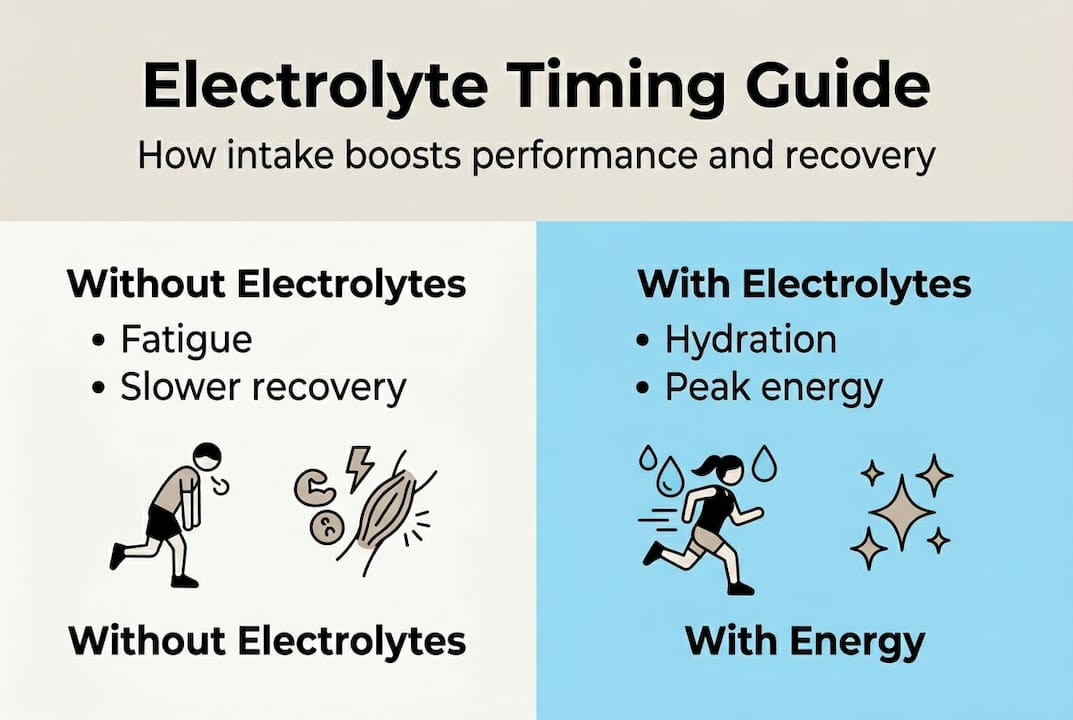
| Timing window | What happens without electrolytes | What happens with electrolytes |
|---|---|---|
| 2 hours pre-session | Suboptimal fluid retention | Improved plasma volume and readiness |
| During session | Progressive dehydration, performance drops | Sustained output and concentration |
| Within 30 min post | Slow recovery, elevated fatigue | Faster fluid and sodium restoration |
Understanding optimising electrolyte intake goes well beyond choosing a good product. Timing is the framework that makes everything else work.
Pre-exercise timing: How to set yourself up for success
Understanding general science is essential, but what you do before that starting whistle can make or break the session. The single most evidence-backed pre-exercise strategy is sodium hyperhydration, consuming a sodium-rich drink approximately two hours before training or competition.
Sodium hyperhydration 2 hours before exercise increases fluid retention by approximately 509 mL, reduces urine output, and lowers body mass loss during exercise in heat. For female athletes training in warm gyms or outdoor summer conditions, this is a meaningful physiological edge. You start the session better hydrated, which delays the onset of dehydration and supports cardiovascular output.
Here is a straightforward pre-exercise protocol:
- Two hours before: Mix a sodium-based electrolyte drink (targeting 400-600 mg sodium) with 500 mL of water. Sip steadily over 20-30 minutes rather than downing it quickly.
- 60 minutes before: Drink an additional 250-350 mL of plain water if you are not already feeling bloated or overly full.
- 15-20 minutes before: Small top-up of 150-200 mL if it is particularly warm, humid, or your session is expected to exceed 90 minutes.
Pro Tip: If you are in your luteal phase (the two weeks before your period), your body naturally retains less sodium. Increasing your pre-exercise sodium dose slightly during this phase, by around 10-15%, can offset the hormonal-driven losses and help you maintain fluid balance into the session.
Perimenopause adds another layer. Oestrogen helps retain sodium, and as levels decline, so does your natural ability to hold on to fluid before a session. This means women aged 40-50 especially may need a more deliberate pre-exercise protocol than their younger counterparts.

Pre-exercise sodium strategy at a glance:
| Factor | Recommended sodium | Timing |
|---|---|---|
| Standard training session | 400-500 mg | 2 hours before |
| Hot or humid conditions | 500-700 mg | 2 hours before |
| Luteal phase or perimenopause | 500-650 mg | 2 hours before |
| Session exceeding 90 minutes | 600-700 mg | 2 hours before |
One red flag to watch: overhydration. Drinking excessive fluids without sodium to match dilutes your blood sodium levels and can trigger hyponatraemia even before the session starts. Symptoms include bloating, nausea, and disorientation. Electrolytes are not optional extras if you are pushing high fluid volumes. For more on getting your pre-session mix right, this guide to electrolyte mixing for performance is worth bookmarking. You can also find additional electrolyte timing tips tailored to female athletes in training.
Electrolytes during exercise: Staying ahead of dehydration and fatigue
With pre-exercise sodium locked in, let’s tackle fluid and electrolyte strategy once the action begins. The challenge during exercise is not just fluid loss. It is sodium loss. Sweat contains far more sodium than any other electrolyte, and individual variation is enormous.
Sweat sodium loss ranges from 300 to 2,000 mg per litre depending on the individual, making generic hydration advice genuinely unreliable. A light sweater doing a 45-minute class needs a very different approach to a heavy sweater racing for two-plus hours in July. The American College of Sports Medicine recommends 300-600 mg of sodium per hour during exercise lasting over two hours.
During-exercise electrolyte priorities:
- For sessions under 60 minutes: Focus on pre-exercise loading; water is generally sufficient during the session unless sweat rate is very high
- For sessions of 60-90 minutes: Begin electrolyte intake at the 45-minute mark, targeting 300-400 mg sodium
- For sessions over 90 minutes: Aim for consistent electrolyte intake every 45-60 minutes, with sodium as the priority
- In hot conditions: Start electrolyte intake earlier, around the 30-minute mark, and increase frequency
Statistic to know: Heavy sweaters can lose up to 2,000 mg of sodium per litre of sweat. If you are sweating through two litres in a long session, that is a 4,000 mg deficit that water alone cannot fix.
Combining sodium with carbohydrates during exercise is not just for endurance athletes. The co-transport of sodium and glucose in the gut actually accelerates absorption of both. This means an electrolyte product that includes a small amount of carbohydrate can deliver hydration faster than one that relies on sodium alone. If you are deep into a functional fitness event or a long trail run, that speed of absorption matters.
Pro Tip: If you notice muscle cramps appearing consistently in the second half of your sessions, that is often a sodium depletion signal rather than a magnesium deficiency, which is the more common assumption. Try increasing your sodium intake during exercise before adding more magnesium and see whether cramp frequency reduces.
For women who find tablets more convenient than drinks mid-session, fast-acting electrolytes can simplify the during-exercise strategy without compromising absorption. If you are building towards longer events, this guide on electrolyte use for endurance covers pacing your intake across extended efforts. The nutritional priorities for athletes also provide a useful broader frame for fuelling around your training.
Personalising electrolyte timing: Key variables for women aged 30-50
While guidelines matter, not every body or every day requires the same protocol. Here is how to tune timing to you.
For female athletes between 30 and 50, hormonal variation is one of the most powerful and underappreciated variables in electrolyte management. Research confirms that hot conditions, heavy sweating, and the luteal phase all increase sodium requirements, while perimenopause further complicates the picture by reducing oestrogen-driven fluid retention. Ignoring these variables and sticking to a one-size-fits-all protocol means leaving performance on the table.
For females in high-intensity sports, personalising electrolyte timing via sweat testing and cycle tracking is strongly recommended. Here is how to approach it practically:
Common personalisation factors:
- Menstrual cycle phase: Follicular phase (days 1-14) typically requires less sodium adjustment. Luteal phase (days 15-28) may demand an earlier pre-exercise sodium dose and more frequent replenishment during activity.
- Perimenopause symptoms: Hot flushes increase sweat rate unpredictably. Increase your baseline sodium intake on days when you notice more heat intolerance.
- Sweat rate testing: Weigh yourself in workout clothes before and after a one-hour session without drinking. Every 1 kg lost equals approximately 1 litre of sweat. Multiply by your sweat sodium concentration estimate to get a rough loss figure.
- Environmental conditions: Humidity matters as much as temperature. Air conditioning can suppress your perception of sweat without reducing your actual fluid loss.
Pro Tip: Keep a simple training log that notes your electrolyte timing, session length, and how you felt at the 45-minute and 90-minute marks. After four weeks, patterns emerge. You will start to see whether pre-loading consistently changes your second-half performance, or whether during-exercise intake is your bigger gap.
Common timing mistakes women aged 30-50 make:
- Treating every session identically regardless of phase or environment
- Waiting for symptoms like cramping or brain fog before adjusting intake
- Under-dosing during the luteal phase because “I did not feel that different last month”
- Focusing entirely on magnesium for cramps while ignoring sodium, which is the primary driver of acute cramping during intense exercise
For women optimising around training performance, this guide on dietary electrolyte strategies provides food-first options to complement supplementation. And if you want to understand the direct link between electrolytes and muscle performance for women, that resource connects the physiology directly to your training output. A practical overview of sports diet strategies can also help you build the nutritional base that makes timing protocols most effective.
A better way to time electrolytes: What most guides miss
Here is the uncomfortable truth: most generic hydration guides are written for a notional 75 kg male athlete doing a moderate-intensity session in mild conditions. They are not written for a 43-year-old woman who trained at 6am, is midway through her luteal phase, and has a Hyrox qualifier on Saturday.
“Drink to thirst” is not wrong in principle. But for high-intensity female athletes, it is incomplete. By the time thirst registers, you are already behind. More importantly, thirst does not tell you what to drink, only that you need fluid. It misses the sodium, the timing, and the hormonal context entirely.
We have seen athletes switch products, spend money on premium recovery tools, and overthink their nutrition, only to find that restructuring when they take what they already had was the actual lever. This is not about complexity. It is about intention. Pre-loading sodium two hours out, sipping electrolytes from the 45-minute mark, and hitting that 30-minute post-exercise window changes outcomes in ways that product swaps alone rarely do. For a clearer picture of how different formats compare, this breakdown of electrolyte tablet comparisons helps you match format to your timing strategy.
Fuel your performance with targeted electrolyte support
You now have the framework. Pre-load with sodium, stay ahead of sweat loss during your session, and hit the recovery window within 30 minutes. The next step is making sure the products you reach for are built to match that precision.
At Interval, our electrolyte formulations use natural ingredients without artificial fillers, designed for women who train with purpose. Whether you are building your routine from scratch or fine-tuning what you already do, our starter bundle gives you a practical starting point. If pre-workout support is part of your plan, our no side-effect pre-workout pairs directly with your electrolyte timing strategy to prime your output without the crash.
Frequently asked questions
What is the ideal time to take electrolytes as a female athlete?
Aim for sodium-rich fluids 1-2 hours before your session, and then again within 30 minutes post-exercise to restore balance and support recovery effectively.
How does my menstrual cycle affect electrolyte timing?
Your sodium and fluid needs can increase during the luteal phase and perimenopause, so adjusting your pre-exercise dose to hormonal shifts helps maintain consistent performance across the month.
Can I overdo electrolyte supplements?
Yes. Excessive intake without matching it to your actual sweat loss risks overhydration or mineral imbalances; always tailor intake to conditions rather than following a blanket protocol.
Is water alone enough during high-intensity training?
For extended or intense sessions, water alone cannot replace the sodium lost in sweat, and relying on it exclusively risks diluting blood sodium levels.
What if I exercise for less than an hour?
For sessions under an hour, pre-exercise hydration is your priority; in most cases water suffices unless you are a heavy sweater or training in particularly hot conditions.