


High-intensity sports nutrition for women: fuel and recover
TL;DR:
- Most female athletes rely on generic, male-based sports nutrition advice that fails to account for their unique physiology. Personalising, periodising, and timing nutrition strategies according to hormonal fluctuations and training load significantly enhances performance and recovery. Building a data-driven, flexible approach tailored to individual responses yields better results than applying one-size-fits-all protocols.
Most female athletes doing high-intensity training are eating for a generic athlete, not for themselves. They follow carb-loading advice pulled from male-dominated research, wonder why recovery feels sluggish, and assume they just need to train harder. The reality is that nutrition for high-intensity sport is a precision tool, and for women aged 30 and above juggling demanding training blocks with real life, getting the fundamentals right changes everything from session quality to how quickly your body bounces back.
Table of Contents
- Understanding high-intensity sports nutrition: key concepts
- The essential macronutrients: carbohydrate, protein, and energy
- Timing your nutrition: before, during, and after training
- Tailoring nutrition for female athletes: personalisation and hormonal factors
- Putting it all together: practical steps to optimise your nutrition
- Why one-size-fits-all advice fails: the real key to performance for active women
- Support your training with evidence-based nutrition solutions
- Frequently asked questions
Key Takeaways
| Point | Details |
|---|---|
| Personalise your approach | Women’s high-intensity sports nutrition works best when tailored to your training, physiology, and cycle. |
| Prioritise carbs and adequate protein | Carbohydrate fuels sessions and recovery, while protein supports muscle repair—both are essential daily. |
| Timing fuels results | What you eat before, during, and after training is as important as total intake for peak performance and recovery. |
| Watch for low energy | Ensuring enough calories prevents health issues and sustains training progress, especially in busy women. |
| Adjust and track | No single plan fits all—use feedback from your body and cycles to adjust for best results. |
Understanding high-intensity sports nutrition: key concepts
High-intensity sports nutrition is the application of nutrition strategies — what, when, and how to eat — to meet increased energy demands and support recovery and adaptation from high-intensity training and competition. It is not a diet. It is a performance strategy. The distinction matters enormously.
Generic sports nutrition advice was largely built around male physiology and moderate-intensity endurance work. When women apply it directly to high-intensity formats like HIIT, CrossFit, Hyrox, or circuit training, the fit is rarely perfect. Female athletes can have nutrition needs that differ substantially from general guidance due to sex-specific physiology, meaning strategies proven in male populations do not always translate directly.
A useful framework for building your approach is the 4Ps: Personalise, Periodise, Prefuel, Prepare. Think of it as four levers you can pull to make your nutrition work harder for you.
- Personalise: Start from your individual body, training load, and life demands, not a template.
- Periodise: Match your intake to your training cycle. Heavy training weeks need more fuel; deload weeks need less.
- Prefuel: Ensure you arrive at every session adequately fuelled, not running on yesterday’s leftovers.
- Prepare: Plan your recovery nutrition in advance so it actually happens, rather than being an afterthought.
| Factor | Generic approach | Women-specific approach |
|---|---|---|
| Carbohydrate strategy | High-carb always | Periodised to training load and cycle phase |
| Protein timing | Post-workout focus only | Distributed across day, adjusted for adaptation goals |
| Energy intake | Caloric targets from population norms | Individual energy availability monitoring |
| Supplement use | Blanket recommendations | Evaluated against female-specific evidence |
For those also managing time-poor schedules, training for busy professionals requires a nutrition strategy that is practical as much as it is scientifically sound.
The essential macronutrients: carbohydrate, protein, and energy
Once you have the framework, it is time to get specific about fuel sources. Three macronutrients drive high-intensity performance: carbohydrate, protein, and total caloric energy. Each has a distinct role, and getting any one of them wrong creates a chain reaction through your training and recovery.
Carbohydrate is the most important macronutrient for high-intensity work. At intensities above 70% of maximum effort, which covers most HIIT and interval-based sessions, your body relies almost exclusively on muscle glycogen as its fuel source. Carbohydrate supports muscle glycogen restoration, which is central to recovery and readiness for subsequent sessions. Insufficient carbohydrate intake between sessions leads to incomplete glycogen replenishment, which shows up as early fatigue, reduced power output, and compromised technique. For women doing two to four high-intensity sessions per week, this is not an abstract concern. It is a practical problem that plays out every time you feel flat ten minutes into a session that should feel manageable.
Protein is your muscle’s repair crew. Protein intake supports adaptation and recovery in high-intensity training, and both the quantity and timing should align with your training goals and energy availability. The current evidence for active women points to distributing protein across four to five eating occasions daily, aiming for 20 to 40 grams per meal, rather than trying to hit a large single dose. Leucine-rich sources like Greek yoghurt, eggs, fish, and legumes are effective and practical.
“Adequate energy availability is not optional for female athletes doing high-intensity work. It is the foundation on which every other nutrition strategy rests.”
Total energy intake is where many female athletes quietly undermine themselves. Evidence-informed nutrition strategies for women in sport consistently emphasise adequate energy availability as the priority, before worrying about macronutrient ratios. Low energy availability, eating too little to support both your training and basic physiological function, disrupts hormones, suppresses immunity, impairs bone health, and slows recovery. It is surprisingly easy to fall into if you are also trying to manage body composition.
| Macronutrient | Primary role | Practical target (high-intensity days) |
|---|---|---|
| Carbohydrate | Glycogen fuel and restoration | 5 to 7g per kg of body weight |
| Protein | Muscle repair and adaptation | 1.6 to 2.2g per kg of body weight |
| Total energy | Energy availability and health | No deficit greater than 300 kcal from training expenditure |
Pro Tip: If you regularly feel hungry, irritable, or fatigued in the 24 hours after a hard session, low energy availability is the first thing to investigate, before blaming sleep or overtraining.
Learn more about how to structure this in our HIIT nutrition guide for women and our workout fuel guide for women.
Timing your nutrition: before, during, and after training
Knowing what to eat is half the job. Knowing when to eat it is where performance gains or losses are actually made. High-intensity nutrition guidance centres on appropriate carbohydrate and protein amounts and ratios before, during when needed, and after sessions to maintain intensity, duration, and recovery.
Here is how to structure your nutrition around a typical high-intensity session:
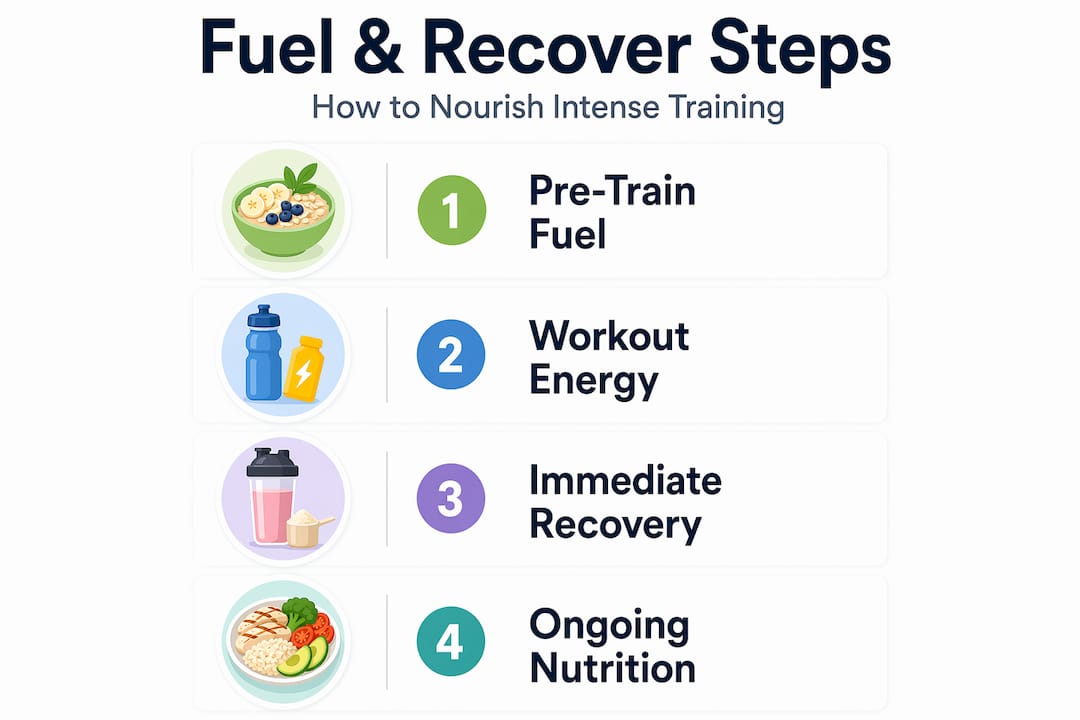
- Two to three hours before training: Eat a balanced meal with moderate carbohydrate, lean protein, and low fat and fibre to avoid gastrointestinal issues. Think rice with chicken and vegetables, or oats with yoghurt and berries.
- Thirty to sixty minutes before training: A small, carbohydrate-focused snack if you trained early or skipped your pre-session meal. A banana, rice cakes with honey, or a small portion of dried fruit works well.
- During training (sessions over 60 to 75 minutes): Electrolytes and small amounts of fast carbohydrate become relevant. For shorter sessions, water is generally sufficient. For longer efforts or competitions, 30 to 60 grams of carbohydrate per hour is a practical starting point.
- Within 30 to 60 minutes after training: This is your critical recovery window. Combine carbohydrate with protein to restore glycogen and begin muscle repair. A 2:1 to 3:1 carbohydrate-to-protein ratio is a common target.
- Two to three hours after training: A full balanced meal to continue the recovery process and ensure total energy intake is adequate.
For those doing double sessions or multiple competitions in a day, the priority is matching intake to training load and timing to keep glycogen stores high and supply protein for ongoing repair. Recovery becomes a continuous job rather than a single post-workout event.
Pro Tip: Prepare your post-training snack before your session begins. Decision fatigue and appetite suppression immediately after intense exercise are real obstacles. Having food ready removes the friction.

A common timing mistake is treating the post-workout window as optional. Another is overcorrecting and eating a very large meal immediately after exercise when digestion is sluggish. Neither extreme serves your post-workout recovery process.
It is also worth noting that timing your HIIT nutrition correctly matters even on rest days. Active recovery and lighter training days still require adequate intake to support the repair processes initiated during harder sessions.
Tailoring nutrition for female athletes: personalisation and hormonal factors
Everything covered so far becomes significantly more effective when it is personalised to your physiology. This is where most generic programmes fall short and where female athletes, particularly those in their 30s and 40s, see the biggest gains when they start paying attention to their own data.
Evidence-informed frameworks for women in sport explicitly include hormonal fluctuation considerations and the management of low energy availability. Your menstrual cycle creates meaningful shifts in metabolism, substrate preference, and recovery capacity across four distinct phases. During the luteal phase, for example, progesterone elevation increases protein breakdown rates and can raise resting energy expenditure by 100 to 300 kilocalories per day. Ignoring this while holding your nutrition static is leaving performance on the table.
- Follicular phase (days 1 to 13): Oestrogen rises. Carbohydrate utilisation tends to be more efficient. Higher-intensity sessions may feel easier. Take advantage of this window for your most demanding training.
- Ovulation (around day 14): Energy and strength often peak. Maintain adequate fuelling to match the output.
- Luteal phase (days 15 to 28): Progesterone rises. Protein needs increase slightly. Energy demands rise. Fatigue and appetite changes are common. Slightly increasing caloric and protein intake during this phase can stabilise performance and mood.
- Perimenopause and beyond: Hormonal variability increases further. Protein needs rise as muscle synthesis becomes less efficient. Minerals for female athletes including calcium, magnesium, and iron become particularly important.
“One-size-fits-all fuelling is not just inefficient for women. It can actively work against performance and health when it fails to account for hormonal context.”
Some carbohydrate strategies tested in males have mixed or null performance effects in women, which reinforces the argument that you cannot simply import someone else’s protocol and expect it to work.
Individual cues that tell you your nutrition is working include: consistent energy across sessions, stable mood, regular menstrual cycles, minimal post-session soreness beyond 48 hours, and improving performance metrics over weeks. When these markers deteriorate without a corresponding increase in training load, nutrition is usually the first place to look. For guidance grounded in natural ingredients and female-specific considerations, our guide on natural sports nutrition for women is a practical starting point. You can also find tailored training tips that complement your nutrition planning.
Putting it all together: practical steps to optimise your nutrition
Science without application is just interesting reading. Here is how to translate everything above into a system that works in real life.
- Start with a self-assessment. Track your current intake for five to seven days without changing anything. Note your training sessions, energy levels, sleep quality, and recovery. This gives you a baseline from which to make meaningful comparisons.
- Set one or two specific goals. “Better recovery” is vague. “Reduce post-session muscle soreness to under 36 hours” is measurable. Specific goals help you identify which nutrition lever to pull first.
- Build a meal structure around your sessions. Map out your training week and attach a rough eating plan to each day. High-intensity days need more carbohydrate. Rest days need more protein relative to carbohydrate. Prep what you can in advance.
- Introduce one change at a time. Changing your pre-session meal, post-session snack, and hydration strategy simultaneously makes it impossible to identify what is actually working. Make one change, assess it across two weeks, then move to the next.
- Track the impact. Use simple performance markers: session rating of perceived exertion (RPE), time to feel recovered, and mood the day after training. You do not need sophisticated software. A notebook works.
- Adjust for your cycle and life context. Build flexibility into your plan. A heavy work week, travel, or the luteal phase may all require temporary adjustments. The goal is a system that bends rather than breaks.
High-intensity sports nutrition is built on personalisation, timing, and matching intake to both energy demand and recovery needs. Mastering this iterative process is what separates athletes who plateau from those who keep progressing. Our guide on balancing nutrition for intense sports goes deeper on this exact process.
Why one-size-fits-all advice fails: the real key to performance for active women
Here is the uncomfortable truth most sports nutrition content will not tell you plainly: the majority of evidence behind popular fuelling strategies was generated in male subjects. When that research is applied wholesale to female athletes, particularly those over 30 dealing with hormonal fluctuations, it often underperforms or backfires.
We have seen athletes meticulously follow carbohydrate loading protocols only to feel bloated, sluggish, and no better fuelled than they were before. Why? Because carbohydrate strategies tested in males do not always benefit female athletes in the same way, making personalisation not just preferable but essential.
The smarter path is to treat your nutrition like your training: progressive, evidence-informed, and constantly refined. Athletes who perform consistently well are not following someone else’s plan. They are iterating their own. They track, adjust, and build frameworks around their real physiological responses, not theoretical ones built for a different body.
Generic plans also tend to underestimate life load. Stress, sleep debt, and work demands all affect cortisol, digestion, and appetite regulation. A woman training at high intensity while managing a career and family does not have the same recovery equation as a 22-year-old male sprinter with a two-hour daily nap window. Acknowledging this is not lowering your standards. It is being honest about your actual operating conditions so your nutrition strategy can actually work within them.
The smartest athletes we see using our women-focused sports nutrition resources are those who have stopped chasing perfect and started chasing precision. They make small, consistent adjustments. They pay attention. And over time, they outperform those relying on generic programmes by a considerable margin.
Support your training with evidence-based nutrition solutions
Applying these strategies is far more effective when you have products designed to work with your physiology rather than against it. Natural ingredients, transparent formulations, and products built specifically for high-intensity performance are not marketing language. They are what your body actually responds to when you are training hard several times a week.
Our Starter Bundle is designed for exactly this: a practical, evidence-aligned entry point that covers your pre-session energy and in-session hydration without unnecessary additives. It pairs well with the nutrition strategies outlined here and takes the guesswork out of the supplement side of your fuelling plan. For a deeper look at how to structure everything around your sessions, our detailed HIIT nutrition guide covers the full picture with practical protocols you can apply immediately.
Frequently asked questions
What foods should I prioritise after high-intensity training?
Carbohydrate-rich foods to restore glycogen and quality protein for muscle recovery are best after high-intensity work, as carbohydrate supports glycogen restoration which is central to readiness for your next session. Practical options include rice with fish, Greek yoghurt with fruit, or a smoothie combining oats, banana, and a protein source.
Why is energy availability so important for women?
Low energy intake disrupts hormones, immunity, and performance in ways that accumulate quickly, and evidence-informed strategies for women consistently prioritise adequate energy availability above everything else. The risks of under-fuelling are disproportionately impactful for female athletes.
Are supplements necessary for high-intensity athletes?
Supplements can play a supporting role but are not a replacement for a well-structured food-based approach, and their effects are not always consistent across individuals, particularly in female populations. Electrolytes and evidence-backed pre-workout formulations tend to offer the most reliable benefit.
Should my nutrition change across my menstrual cycle?
Yes, hormonal fluctuation considerations are explicitly included in evidence-informed frameworks for women in sport, and adjusting your carbohydrate and protein intake across cycle phases can meaningfully stabilise energy and recovery. Tracking your sessions alongside your cycle for two to three months will reveal your individual patterns quickly.