


Top tips for race day nutrition: fuel smarter
TL;DR:
- Proper race day nutrition involves carbohydrate loading, meal timing, and electrolyte hydration to enhance performance. Athletes should test their fueling strategies during training, avoid new products on race day, and adjust intake based on environmental conditions. Simplified, consistent fueling and hydration plans help prevent gastrointestinal issues and energy depletion during endurance events.
Race day nutrition is defined as the deliberate management of carbohydrate intake, hydration, and meal timing to sustain energy output and prevent gastrointestinal distress during competition. The top tips for race day nutrition all point to one non-negotiable truth: what you eat and drink in the 36 hours before the gun fires shapes your performance more than anything you do on the day itself. Carbohydrates are your primary fuel source for endurance events. Electrolyte balance determines whether your muscles keep firing or start cramping. Get both right, and you arrive at the start line with full glycogen stores, a settled stomach, and a clear head.
1. What are the best carbohydrate loading strategies before race day?
Carbohydrate loading is the practice of maximising glycogen stores in the 24–36 hours before a race. The target is 8–12 g/kg of carbohydrates per day across that window. For a 70 kg athlete, that means 560–840 g of carbohydrate daily. That is a significant shift in how your plate looks.
The key foods to prioritise are low fibre, low fat, and familiar. White rice, pasta, bagels, and bananas all fit the brief. These foods digest quickly and convert to glycogen without the bloating or cramping that high-fibre alternatives cause. Avoid wholegrain bread, lentils, and cruciferous vegetables in this window. Your gut will thank you.
Meal timing matters as much as food choice. Spread your carbohydrate intake across three to four normal-sized meals rather than two enormous ones. Eat your last main meal early in the evening, ideally by 7 PM, so digestion is complete before sleep. A light carbohydrate snack before bed is fine if you are still short of your target.
- White rice or pasta with a lean protein source at lunch and dinner
- Bagels or white toast with jam or honey as snacks
- Bananas, rice cakes, or sports drinks to top up between meals
- Avoid high-fat sauces, creamy dressings, and fried foods entirely
Pro Tip: Carb-loading does not mean eating more calories overall. The goal is shifting macro composition so carbohydrates replace fat and fibre, not pile on top of them. Overeating the night before a race causes discomfort, not extra energy.
2. How should athletes fuel on race morning?
The race morning meal sets your blood glucose and tops up liver glycogen after an overnight fast. Consume 1–4 g/kg of carbohydrate and finish eating 2–4 hours before your start time. A 70 kg runner targeting 2 g/kg needs roughly 140 g of carbohydrate. That is a large bagel with jam and a banana, plus a sports drink.
Keep fat and fibre minimal at this meal. Both slow gastric emptying, which means food sits in your stomach longer and raises the risk of nausea mid-race. A small amount of protein is fine. The meal should feel light and familiar, not heavy.
Solid race day meal ideas for the morning include:
- Bagel with jam or honey and a banana
- Instant oats with a sliced banana and a drizzle of honey
- White toast with peanut butter (small amount) and a sports drink
- Rice cakes with jam and an electrolyte drink
Hydrate moderately alongside your meal. Aim for 400–600 mL of fluid with electrolytes rather than plain water. This primes your sodium levels without overloading your stomach.
Pro Tip: Practise your pre-race breakfast during long training sessions at race pace. Your gut adapts to eating before hard efforts, and race day is not the time to find out your stomach rejects oats.
3. What to eat before a race with an early start time
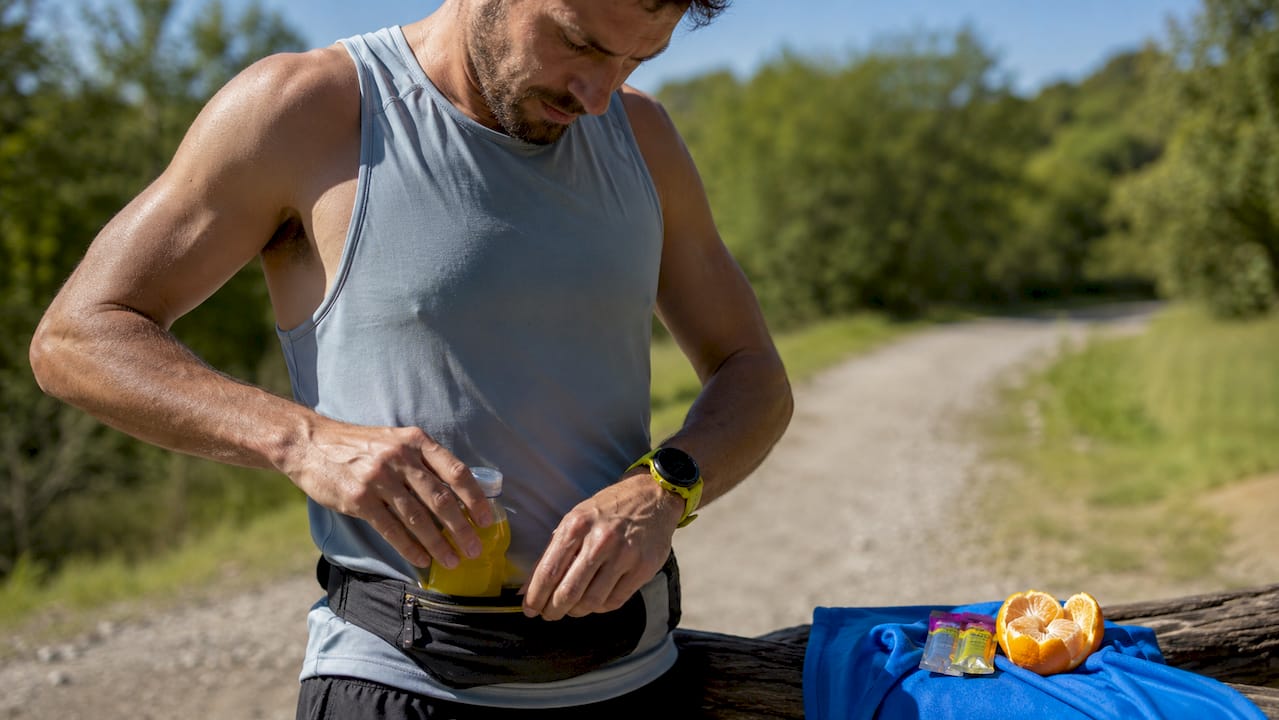
Very early race starts create a genuine problem. A 6 AM gun means a 3 AM alarm for a full pre-race meal, which most athletes cannot stomach. The solution is to eat a normal dinner the night before, then rely on a small carbohydrate top-up 45–60 minutes before the start.
A single energy gel, a banana, or two rice cakes with honey all work well in this window. These are fast-digesting carbohydrates that raise blood glucose without sitting heavily in the gut. Keep the portion small. The goal is to stabilise glucose levels, not to replicate a full breakfast.
Professional coaches recommend compressing the breakfast window for early starts and relying on these small carb top-ups to maintain early-race glucose levels. This approach works because your glycogen stores from the previous evening’s carb-loading are still largely intact after sleep.
4. What are the best strategies for nutrition and hydration during the race?
In-race fuelling is where many athletes lose time they gained in training. For events lasting longer than 90 minutes, 60–90 g of carbohydrates per hour is the evidence-based target. That is not a suggestion. Athletes who under-fuel hit the wall. Those who hit their carbohydrate targets maintain pace.
Fluid intake targets sit at 400–800 mL per hour, adjusted upward in heat or high humidity. Sodium intake should reach 300–1,000 mg per hour to maintain electrolyte balance and prevent exercise-associated hyponatraemia. These three numbers, carbohydrates, fluid, and sodium, form the backbone of every effective in-race nutrition plan.
Use a mix of carbohydrate forms for better absorption. Glucose-fructose blends, found in most quality energy gels and sports drinks, use two separate intestinal transport pathways. This allows your gut to absorb more carbohydrate per hour than glucose alone. Gels, chews, and sports drinks that combine both sugars are the most efficient delivery method for long-distance events.
Avoid overdrinking plain water during the race. Excess plain water dilutes blood sodium and causes hyponatraemia, a condition that produces confusion, nausea, and in severe cases, seizures. Electrolyte drinks or water taken alongside sodium-containing foods are far safer choices. For more on managing this risk, the hyponatraemia risks for athletes article covers the physiology in detail.
Statistic callout: The recommended in-race sodium window of 300–1,000 mg per hour is wide by design. Sweat rate and sodium concentration vary significantly between athletes. Test your own needs in training, not on race day.
Pro Tip: Start fuelling at 15–30 minutes into the race, not when you feel depleted. By the time you feel hungry or tired, your blood glucose has already dropped. Early fuelling keeps you ahead of the deficit.
5. Which nutrition mistakes should athletes avoid on race day?
The single most damaging mistake is trying a new gel, bar, or drink on race day. Never introduce new nutrition products without testing them in training first. Gastrointestinal distress mid-race is not just uncomfortable. It forces you to slow down or stop entirely.
Excessive fibre and fat in the 24 hours before the race are the second most common error. Both slow digestion and increase the risk of cramping and urgent bathroom stops during the event. Swap your usual wholegrain choices for white alternatives in this window.
Overdrinking plain water is the third pitfall. Drinking large quantities of plain water within 45 minutes of the start causes gastric sloshing and dilutes blood sodium. Small, frequent sips of an isotonic electrolyte drink are far more effective than gulping plain water at aid stations.
Timing errors also cost athletes dearly. Eating too close to the start, within 60 minutes, raises insulin and can cause reactive hypoglycaemia early in the race. Eating too early, more than four hours before, leaves liver glycogen partially depleted by the time you start. The 2–4 hour window exists for a reason.
Race day nerves affect digestion directly. Adrenaline slows gastric emptying and can cause nausea even with familiar foods. Stick to your tested plan and avoid the temptation to eat more because you feel anxious.
6. How to tailor nutrition to different race lengths and start times
Nutrition strategies for races vary significantly depending on event duration. A 5K runner needs a simple pre-race carbohydrate meal and almost no in-race fuelling. A marathon runner needs full carb-loading, a structured race morning meal, and a detailed in-race fuelling plan. An ultra-distance athlete needs all of that plus a strategy for solid food and slower pacing to allow digestion.
| Race type | Carb-loading needed? | In-race fuelling | Fluid per hour |
|---|---|---|---|
| Short race (under 90 mins) | Minimal | Not required | 400 mL |
| Half marathon | Moderate | Optional from 60 mins | 400–600 mL |
| Marathon | Full 24–36 hr protocol | 60–90 g carbs/hr | 500–800 mL |
| Half-Ironman or ultra | Full protocol plus solid food | 60–90 g carbs/hr | 600–800 mL |
Early start times compress the fuelling window. Athletes racing at 6–7 AM should eat a carbohydrate-rich dinner the night before, sleep, and then take a small fast-digesting carbohydrate top-up 45–60 minutes before the gun. This approach, recommended by coaches working with endurance athletes, avoids the discomfort of forcing a large meal in the early hours.
Environmental conditions also shift your targets. Racing in heat increases sweat rate and therefore both fluid and sodium needs. Adjust upward from the baseline targets and test your hydration plan in similar conditions during training. Understanding electrolyte ratios before race day gives you a clear framework for making those adjustments.
Key takeaways
Race day nutrition performance depends on carbohydrate loading, precise meal timing, and electrolyte-matched hydration, all tested in training before the event.
| Point | Details |
|---|---|
| Carb-load correctly | Aim for 8–12 g/kg of carbohydrates daily in the 24–36 hours before the race. |
| Time your race morning meal | Eat 1–4 g/kg of carbohydrate 2–4 hours before the start for optimal digestion. |
| Fuel early during the race | Start taking on 60–90 g of carbohydrates per hour from 15–30 minutes in. |
| Prioritise electrolytes over plain water | Target 300–1,000 mg of sodium per hour to prevent hyponatraemia and cramping. |
| Test everything in training | Never use a new gel, drink, or meal on race day without a prior training trial. |
What I have learned from watching athletes get this wrong
Athletes spend months building fitness and then undo it in 36 hours with poor nutrition choices. I have seen it repeatedly. The most common pattern is the carb-binge the night before, a huge plate of pasta drowning in cream sauce, followed by a restless night and a bloated start line. The athlete arrives undertrained in their gut even if they are perfectly trained in their legs.
Your gut needs training as much as your legs do. Use long training sessions to trial every product and timing strategy you plan to use on race day. This is not optional. Athletes who practise their nutrition in training arrive at the start line with a gut that is adapted, not surprised.
The other pattern I see is overcomplication. Athletes read about glucose-fructose ratios and sodium co-transport and then build a nutrition plan so complex they cannot execute it under race pressure. The best plan is the one you can follow when you are tired, hot, and 20 miles in. Keep it simple. Pick two or three products you know work, set a timer for your fuelling intervals, and stick to it.
Patience matters too. Gut adaptation takes weeks, not days. If your first long run with gels goes badly, that is information, not failure. Adjust the product, the timing, or the volume, and try again. Athletes who treat nutrition as a trainable skill improve far faster than those who treat it as an afterthought.
— Tom
Useinterval’s Starter Bundle: built for race day fuelling
Race day nutrition demands products you can trust under pressure. Useinterval’s Starter Bundle is designed specifically for athletes doing high-intensity endurance events, combining natural-ingredient electrolytes and pre-workout support in one package.
The bundle covers the two areas where most athletes fall short: electrolyte balance during the race and pre-race energy without the crash. Both products use natural ingredients and are formulated for athletes who train hard and race harder. Whether you are preparing for a marathon, a Hyrox event, or an ultra, the Starter Bundle gives you a tested foundation to build your race day nutrition plan around.
FAQ
What should I eat the night before a race?
Eat a carbohydrate-rich meal with low fat and low fibre, such as white pasta with a tomato-based sauce or white rice with chicken. Finish eating by 7 PM to allow full digestion before sleep.
How many carbohydrates do I need during a marathon?
Target 60–90 g of carbohydrates per hour using a mix of gels, chews, and sports drinks that contain glucose-fructose blends for maximum absorption.
What are the best pre-race snacks for early morning starts?
A single energy gel, a banana, or two rice cakes with honey taken 45–60 minutes before the start are the most effective options. These fast-digesting carbohydrates stabilise blood glucose without causing gastric discomfort.
How do I avoid hyponatraemia during a race?
Replace plain water with electrolyte drinks and target 300–1,000 mg of sodium per hour. Overconsumption of plain water without electrolytes dilutes blood sodium and causes hyponatraemia.
When should I start fuelling during a race?
Start fuelling at 15–30 minutes into the race, before you feel any energy drop. Waiting until you feel depleted means your blood glucose has already fallen and performance will suffer.