


What is exercise fluid balance? A guide for athletes
TL;DR:
- Exercise fluid balance involves maintaining the body’s optimal water and electrolyte levels during activity to support performance and safety. Proper management of sodium and fluid intake prevents dehydration, enhances cognitive and physical function, and reduces health risks like hyponatremia. Individualized hydration strategies based on sweat rates and environmental conditions are essential for peak athletic performance.
Exercise fluid balance is the process by which the body maintains an optimal ratio of water and electrolytes during physical activity to support peak performance and safe physiological function. Physiologists refer to this as fluid and electrolyte homeostasis, and it governs everything from muscle contraction to cognitive sharpness under load. Get it wrong in either direction and your output suffers. Get it right and you train harder, recover faster, and avoid the health risks that sideline athletes who treat hydration as an afterthought.
What is exercise fluid balance and why does it matter?
Exercise fluid balance is the net result of fluid intake minus fluid losses during physical activity. Those losses come from sweat, respiration, and what physiologists call insensible losses. Insensible fluid losses from breath and skin evaporation can be substantial during intense activity and must be factored into any hydration strategy alongside visible sweat. Most athletes only account for the sweat they can see, which means they are already behind before they start calculating.
The importance of fluid balance extends beyond simple thirst management. Water makes up roughly 60% of body mass in adults, and even modest deficits alter blood viscosity, reduce oxygen delivery to working muscles, and impair the body’s ability to regulate core temperature. When fluid levels drop, the cardiovascular system compensates by increasing heart rate, which raises perceived effort at any given pace or power output.
Electrolytes, particularly sodium, sit at the centre of this system. Sodium and water intake regulate extracellular osmolality and fluid distribution between body compartments. Treating sodium and fluid as separate targets is a mistake that leads to imbalanced strategies. They must be managed as a single combined system.
| Fluid deficit (% body mass) | Performance effect |
|---|---|
| 1% | Increased cardiovascular strain, elevated heart rate |
| 2% | Measurable decline in endurance capacity |
| 3% | Strength and power output impaired |
| 4%+ | Cognitive function and coordination compromised |
How does fluid and electrolyte balance affect exercise performance?
Dehydration impairs cognitive function alongside physical output. Hypohydration negatively affects cognitive performance in athletes, which matters enormously in sports requiring tactical decision-making, reaction time, or technical skill. A CrossFit athlete who loses 3% of body mass in sweat is not just physically weaker. They are also making slower, less accurate decisions under fatigue.
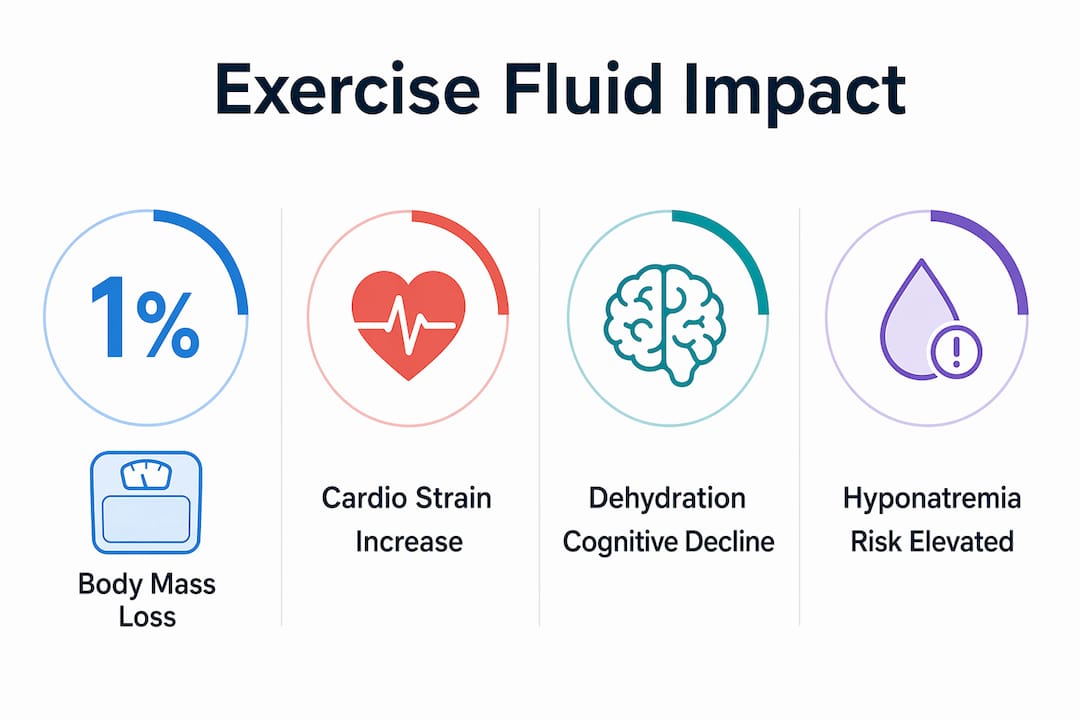
The effects of dehydration on exercise are well-documented, but the risks of overhydration receive far less attention. Overhydration can cause exercise-associated hyponatremia (EAH), a potentially life-threatening condition where sodium concentration in the blood falls dangerously low. EAH occurs when athletes consume large volumes of plain water without replacing the sodium lost in sweat, diluting blood sodium to the point of neurological symptoms including confusion, seizures, and in severe cases, death.
Sodium’s role in this equation is critical. Maintaining sodium-water balance is the primary mechanism for avoiding EAH, and it operates through osmolality regulation. When sodium concentration in the extracellular fluid drops, water shifts into cells, causing them to swell. In the brain, this swelling has no room to expand, which is why EAH produces neurological symptoms so rapidly.
Pro Tip: If you are training for more than 90 minutes in warm conditions, switch from plain water to a sodium-containing drink. The sodium does not just replace what you lose. It also drives thirst and promotes fluid retention, keeping you in positive fluid balance for longer.
The role of electrolytes in exercise goes beyond sodium, but sodium is the dominant electrolyte in sweat and the one most directly linked to fluid distribution. Potassium, magnesium, and chloride all contribute to muscle function and nerve signalling, but no single electrolyte has the same systemic impact on fluid balance as sodium.
What are the best strategies to maintain hydration during exercise?
Evidence-based hydration planning starts before you lace up your shoes. The Merck Manual’s pre-exercise hydration protocol involves consuming 500 to 600 mL two to three hours before activity and a further 200 to 300 mL in the 20 to 30 minutes immediately prior. This two-stage approach gives your kidneys time to process excess fluid and allows you to arrive at the start line in a euhydrated state rather than bloated or already behind.
During exercise, fluid intake during workouts should follow a structured schedule rather than a reactive one. The recommended approach is:
- Drink 200 to 300 mL every 10 to 20 minutes during sustained effort, adjusting upward in hot or humid conditions.
- Use a sodium-containing drink for sessions exceeding 60 minutes to replace sweat electrolyte losses alongside fluid.
- Keep carbohydrate concentration in sports drinks at or below 8% for optimal gastric emptying and absorption.
- Do not rely on thirst as your primary cue. Thirst is a delayed signal/08%3A_Nutrients_Important_for_Fluid_and_Electrolyte_Balance/8.03%3A_Regulation_of_Water_Balance) that activates only after mild dehydration has already begun, meaning you are playing catch-up from the moment you feel it.
- After exercise, replace 1.5 litres per kilogram of body mass lost to achieve full rehydration within a reasonable recovery window.
Post-exercise rehydration is where most athletes underperform. Drinking to match sweat losses one-for-one is not sufficient because you continue to lose fluid through urine and respiration after training ends. The 1.5 litre per kilogram guideline accounts for these ongoing losses and is the standard used by sports medicine practitioners.
Pro Tip: Weigh yourself in minimal clothing before and after a training session. Every kilogram of body mass lost equals approximately one litre of fluid deficit. Do this across several sessions in different conditions to build a personal sweat rate profile. This is the most direct method for personalising your hydration strategy rather than relying on generic guidelines.
Common myths and mistakes about hydration and fluid balance
The most persistent myth in sports hydration is that drinking more water is always better. It is not. The relationship between fluid intake and performance is not linear. Beyond a certain point, excess fluid intake without corresponding sodium replacement actively harms you by diluting blood sodium and triggering EAH. More water is only beneficial when it replaces a genuine deficit.
Several other misconceptions consistently undermine athletes’ hydration strategies:
- Thirst is a reliable guide. Thirst is a backup mechanism, not a precision instrument. By the time you feel thirsty during exercise, you are already in a mild dehydration state. Athletes who train in hot environments or at high intensity need a scheduled approach, not a reactive one.
- Electrolytes only matter for long events. Sodium losses begin with the first drop of sweat. For high-intensity sessions lasting 45 minutes or more, electrolyte replacement is relevant regardless of total duration.
- All sports drinks are equivalent. Carbohydrate concentration matters. Drinks above 8% carbohydrate slow gastric emptying and can cause gastrointestinal distress during hard efforts. The formulation of what you drink is as important as the volume.
- Feeling fine means you are hydrated. Mild dehydration produces no obvious symptoms in many athletes. Performance data, not subjective feeling, is the most reliable indicator of hydration status during training.
- Plain water is always the safest choice. For sessions over 60 minutes, plain water without sodium replacement increases the risk of EAH. A sodium-water balance approach is safer and more effective for sustained exercise.
The underlying principle connecting all of these mistakes is the same. Athletes treat hydration as a simple volume problem when it is actually a composition problem. How much you drink matters. What you drink matters equally.
How to tailor fluid balance to your individual needs
Sweat rates vary enormously between individuals. Sweat loss can reach approximately 950 mL per hour/13%3A_Genitourinary_(a.k.a.Urogenital)_System/13.07%3A_Water_Balance) in extreme conditions, but some athletes lose significantly less. A one-size-fits-all approach to fluid intake during workouts will leave high sweaters chronically under-replaced and low sweaters at risk of overhydration.
The most reliable method for calculating personal fluid needs is the pre and post-exercise weigh-in. Weigh yourself before training, train without drinking, then weigh yourself after. The difference in kilograms approximates your fluid loss in litres. Repeat this across different session types, temperatures, and durations to build a complete picture of your sweat profile. This data feeds directly into a workout hydration routine that is built around your physiology rather than population averages.
Environmental conditions shift the equation significantly. Heat and humidity increase sweat rate and accelerate insensible losses. High altitude increases respiratory fluid losses. Cold conditions suppress thirst while sweat losses remain substantial during hard efforts. Each scenario requires a different baseline intake.
| Scenario | Fluid strategy | Electrolyte priority |
|---|---|---|
| Gym session under 60 mins | Water, 200 mL every 20 mins | Low, water sufficient |
| Outdoor run over 90 mins | Sodium drink, 250 mL every 15 mins | High, sodium replacement critical |
| Hot weather HIIT | Increase volume by 20 to 30%, pre-cool if possible | High, early sodium intake |
| High altitude training | Account for increased respiratory losses | Moderate, monitor closely |
| Competition day | Follow pre-event protocol, no experimentation | High, match race-day conditions |
Electrolyte intake forms include drinks, food, and capsules. Each has a place depending on context. Drinks deliver fluid and electrolytes simultaneously, making them the most practical choice during exercise. Capsules allow precise sodium dosing without adding carbohydrates or volume. Foods like salted nuts or pretzels work well for post-exercise recovery when appetite returns. For hyponatremia risk management, particularly in female athletes who face elevated risk, the form of electrolyte delivery matters less than the consistency of intake relative to fluid volume.
Key takeaways
Effective exercise fluid balance requires managing both fluid volume and sodium intake as a single system, not two separate targets.
| Point | Details |
|---|---|
| Fluid balance is a composition problem | Volume alone is insufficient. Sodium must accompany fluid intake to maintain osmolality and prevent EAH. |
| Thirst is a lagging indicator | Schedule fluid intake during exercise rather than waiting for thirst, which signals dehydration has already begun. |
| Measure your sweat rate | Weigh before and after training to calculate personal fluid deficits and build a tailored hydration plan. |
| Post-exercise replacement exceeds losses | Drink 1.5 litres per kilogram of body mass lost to account for ongoing fluid losses after training ends. |
| Environment changes the baseline | Heat, humidity, and altitude all increase fluid and electrolyte requirements beyond standard guidelines. |
The part most athletes get wrong
I have worked with athletes across a wide range of disciplines, and the most consistent error I see is treating hydration as a volume target rather than a balance problem. Someone will tell me they drank two litres during a session and cannot understand why they cramped or felt flat. The answer is almost always sodium. They replaced the water but not the electrolytes, and their body was running on a diluted system.
The science on this is not new. The relationship between sodium and fluid distribution has been understood for decades. What is new is the growing recognition that overhydration is a genuine clinical risk, not just a theoretical one. Athletes and coaches who have spent years telling people to drink more water are now having to revise that advice in light of EAH data. The Merck Manual’s guidance on this is clear, and yet the “drink more” message persists in gyms and on social media.
My honest recommendation is to start with the weigh-in method. It takes five minutes and gives you data that no generic guideline can match. Pair that with a sodium-containing drink for any session over 60 minutes and you have addressed the two biggest variables in one move. The athletes I see making the most consistent progress are not the ones following the most complex protocols. They are the ones who have nailed the basics with precision.
— Tom
Support your fluid balance with Useinterval
Getting fluid balance right during high-intensity training requires more than water. Useinterval’s electrolyte formulas are built with natural ingredients specifically for athletes who train hard and need precise sodium and electrolyte replacement without artificial additives. The Starter Bundle gives you a complete foundation for pre-workout and electrolyte support, designed to work together as a single hydration system. If you are serious about optimising performance and avoiding the pitfalls of both dehydration and overhydration, this is the most direct starting point.
FAQ
What is the definition of exercise fluid balance?
Exercise fluid balance is the maintenance of an optimal ratio of water and electrolytes in the body during physical activity. It is achieved by matching fluid and sodium intake to losses from sweat, respiration, and insensible evaporation.
How much should you drink during a workout?
The standard protocol is 200 to 300 mL every 10 to 20 minutes during exercise, adjusted for sweat rate, intensity, and environmental conditions. Sessions over 60 minutes require a sodium-containing drink rather than plain water.
What are the effects of dehydration on exercise performance?
Dehydration reduces endurance capacity, impairs strength and power output, and compromises cognitive function. Even a 2% loss of body mass through fluid deficit produces measurable declines in athletic performance.
Can you drink too much water during exercise?
Yes. Drinking excessive plain water without sodium replacement causes exercise-associated hyponatremia, a condition where blood sodium falls dangerously low. EAH produces neurological symptoms and is potentially life-threatening.
How do electrolytes support fluid balance during exercise?
Electrolytes, particularly sodium, regulate osmolality and control how fluid is distributed between body compartments. Without adequate sodium, fluid consumed during exercise cannot be retained effectively and the risk of EAH increases.