


What is fitness-focused hydration: a complete guide
TL;DR:
- Fitness-focused hydration combines water, electrolytes, and carbohydrates to enhance exercise performance, recovery, and fluid absorption. Proper sodium intake supports plasma balance and prevents hyponatremia, especially during prolonged or intense sessions, while carbohydrate concentration influences hydration speed. Personalizing hydration strategies, including sweat-rate testing and combining electrolyte drinks with energy sources, optimizes results and minimizes health risks.
Fitness-focused hydration is defined as a structured approach to fluid intake that combines water, electrolytes (particularly sodium), and carbohydrates to optimise performance, fluid absorption, and recovery during exercise. It goes well beyond drinking plain water. Sports drinks are formulated as carbohydrate-electrolyte beverages specifically to support hydration and exercise performance, and that distinction matters enormously for anyone training at high intensity. Get this wrong and you risk both underperformance and genuine medical danger, including exercise-associated hyponatremia (EAH), a condition caused by overhydration that can be fatal.
What is fitness-focused hydration and why does it go beyond water?
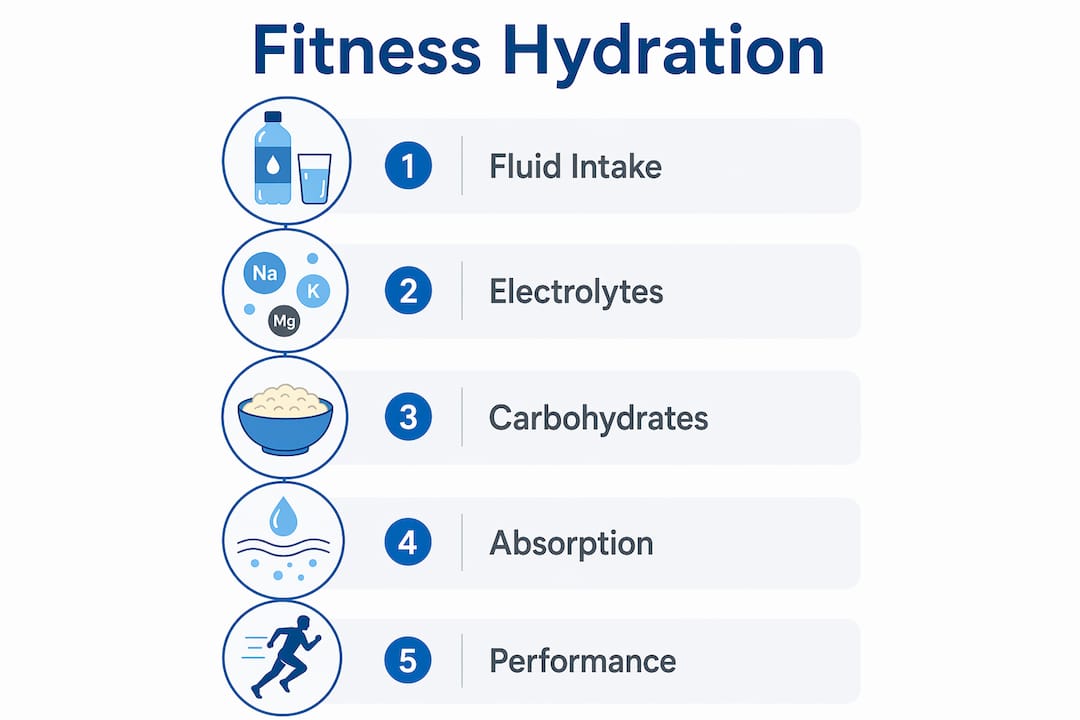
Plain water replaces fluid volume. Fitness-focused hydration replaces fluid volume and restores the electrolyte balance disrupted by sweat, while supplying carbohydrates to sustain energy output. The difference is physiological, not cosmetic.
When you sweat during high-intensity training, you lose sodium, potassium, magnesium, and chloride alongside fluid. Replacing fluid without replacing sodium dilutes blood plasma concentration. That dilution is the root cause of hyponatremia. Even mild dehydration reduces energy levels and cognitive clarity, which confirms that consistent, targeted hydration matters throughout a session, not just when thirst kicks in.
The practical implication is straightforward. For sessions under 45 minutes at moderate intensity, water is usually adequate. For anything longer, harder, or hotter, a structured approach incorporating sodium and carbohydrates produces measurably better outcomes in both performance and recovery.
What roles do electrolytes and carbohydrates play in hydration?
The sodium-glucose cotransport mechanism
The intestinal wall absorbs fluid far more efficiently when sodium and glucose are present together. Optimal oral rehydration solutions use a 1:1 sodium-to-glucose ratio to activate the sodium-glucose cotransporter (SGLT1), which pulls both molecules and water across the intestinal wall simultaneously. Many commercial sports drinks do not meet this ratio, which means their fluid delivery is less efficient than it could be.
Sodium also drives thirst and supports fluid retention in plasma. Without adequate sodium, the kidneys excrete excess fluid rather than retaining it. This is why athletes who drink large volumes of plain water during prolonged exercise can still end up with poor fluid balance.
How carbohydrate concentration affects fluid delivery
Carbohydrates serve two functions in a hydration drink: they activate the cotransport mechanism and they supply energy. The complication is that high carbohydrate concentrations slow gastric emptying, which reduces the rate at which fluid reaches the intestine. A drink optimised purely for energy delivery (above 8% carbohydrate) will hydrate you more slowly than one formulated at 4 to 6%.
This creates a practical tension. If your priority during a session is fluid delivery, use a lower-carbohydrate electrolyte drink. If your priority is energy supply (for example, during a long Hyrox event), you may need to separate your hydration and fuelling strategies rather than relying on a single product.
Key points to understand about electrolyte and carbohydrate roles:
- Sodium maintains plasma osmolality and drives thirst, supporting voluntary fluid intake
- Glucose activates SGLT1 cotransport, accelerating intestinal fluid absorption
- Carbohydrate concentration above 8% slows gastric emptying and reduces hydration speed
- Potassium and magnesium support muscle contraction and reduce cramping risk
- Commercial sports drinks frequently prioritise flavour and energy over optimal sodium-to-glucose ratios
Pro Tip: If you are using a sports drink primarily for hydration rather than energy, check the carbohydrate content. Anything above 6 to 7 grams per 100ml will slow fluid absorption. A dedicated electrolyte product with lower carbohydrate content will hydrate you faster.
Programmed fluid intake versus thirst-driven drinking: which works better?
The debate between scheduled drinking and drinking to thirst is one of the most practically relevant in sports nutrition. Both approaches have real advantages and real failure modes.
| Approach | How it works | Strengths | Limitations |
|---|---|---|---|
| Programmed fluid intake | Fixed volumes at set intervals based on sweat-rate testing | Accounts for individual sweat losses; reduces guesswork | Risks overhydration; ignores real-time physiological signals |
| Thirst-driven drinking | Drink when you feel thirsty, stop when you do not | Physiologically responsive; prevents overdrinking | Thirst lags behind fluid loss; unreliable in heat or high intensity |
| Hybrid approach | Combines scheduled intake with thirst cues and environmental adjustment | Balances safety and performance; adaptable | Requires more planning and self-awareness |
Neither programmed nor thirst-driven strategies are universally superior. That conclusion from a 2025 MDPI review on ultra-endurance hydration reflects what experienced coaches have known for years: context determines the best approach. A hybrid model that uses sweat-rate data as a baseline and adjusts in real time based on thirst, urine colour, and environmental conditions outperforms either rigid strategy alone.
Thirst is regulated by complex feedback mechanisms and often lags behind fluid losses, particularly during high-intensity efforts when cognitive load is high. Relying solely on thirst in a 90-minute HIIT session or a competitive Hyrox race is not a reliable strategy. Equally, drinking to a fixed schedule regardless of how you feel is how athletes end up overhydrated.
Pro Tip: Before a key training block or event, complete a basic sweat-rate test. Weigh yourself before and after a one-hour session without drinking. Every kilogram of body weight lost equals approximately one litre of sweat. Use that figure to set a sensible intake target, then adjust based on thirst during the session.
What are the risks of getting hydration wrong, including hyponatremia?
Dehydration gets most of the attention in fitness media, but overhydration is equally dangerous and far less discussed. Exercise-associated hyponatremia occurs when blood sodium concentration drops below 135 mmol/L, typically because an athlete has consumed more fluid than they have lost through sweat and urine.
EAH causes, severity, and prevention are well documented by World Athletics. Symptoms range from nausea and headache at mild levels to seizures, pulmonary oedema, and death at severe levels. The condition is most common in endurance events but occurs in any prolonged exercise setting where athletes drink aggressively.
Critical risk factors and warning signs to monitor:
- Nausea or headache during or after exercise, particularly if you have been drinking heavily
- Swelling in hands or feet during prolonged activity
- Confusion or disorientation in the later stages of an event
- Weight gain during exercise, which indicates fluid retention from overdrinking
- Low urine output despite high fluid intake
Sodium supplementation of 500 to 700mg per litre is recommended by the American College of Sports Medicine during prolonged exercise, though evidence shows sodium intake alone does not reliably prevent EAH if fluid volumes are excessive. The primary prevention strategy remains drinking to thirst rather than to a fixed schedule. Understanding the risks for female athletes is particularly relevant, as hormonal factors increase EAH susceptibility in some cases.
How to implement fitness-focused hydration for different training intensities
Applying hydration science practically requires matching your strategy to the demands of the session. A 30-minute strength circuit and a 3-hour trail run require completely different approaches.
-
Short sessions under 45 minutes. Water is sufficient for most athletes at moderate intensity. If the environment is hot or you are a heavy sweater, add a small amount of sodium (150 to 300mg) to your pre-session fluid. Post-session, prioritise sodium and fluid to restore balance.
-
Moderate sessions of 45 to 90 minutes. Use a low-to-moderate carbohydrate electrolyte drink (4 to 6% carbohydrate, 400 to 600mg sodium per litre). Aim for 400 to 600ml per hour as a starting point, adjusted by thirst and sweat rate. A workout hydration routine that covers pre-, during-, and post-session intake produces the most consistent results.
-
Long sessions over 90 minutes. Separate hydration and fuelling. Use a dedicated electrolyte drink for fluid replacement and supplement with gels, chews, or solid food for carbohydrate energy. Personalised hydration plans built from sweat-rate and sodium-loss data outperform generic guidelines in this context.
-
Hot or humid conditions. Increase sodium intake to account for higher sweat sodium losses. The role of electrolytes in heat is particularly pronounced for Hyrox athletes and those training in warm environments, where sodium losses can exceed 1,500mg per hour.
-
Recovery hydration. Post-exercise, aim to replace 150% of fluid lost (measured by body weight change) over the two hours following a session. Include sodium to support fluid retention and consider a carbohydrate-protein combination to accelerate glycogen resynthesis. Athletic recovery nutrition that integrates hydration with macronutrient timing consistently improves next-session readiness.
Pro Tip: Urine colour is the simplest real-time hydration marker. Pale straw yellow indicates good hydration. Dark amber means you need more fluid. Clear urine during exercise can indicate overhydration, particularly if you have been drinking to a schedule rather than to thirst.
Key takeaways
Fitness-focused hydration requires sodium, carbohydrates, and fluid working together, because replacing water alone fails to restore the electrolyte balance that high-intensity exercise disrupts.
| Point | Details |
|---|---|
| Beyond plain water | Sports drinks combine electrolytes and carbohydrates to activate intestinal fluid absorption and support energy. |
| Sodium is non-negotiable | Sodium maintains plasma osmolality, drives thirst, and prevents the dilution that causes hyponatremia. |
| Carbohydrate concentration matters | Drinks above 6 to 7% carbohydrate slow gastric emptying; separate hydration and fuelling for long sessions. |
| Hybrid hydration outperforms rigid rules | Combining sweat-rate data with real-time thirst cues produces safer and more effective outcomes than either approach alone. |
| Overhydration is a real danger | Drinking to a fixed schedule without accounting for sweat rate and thirst is the primary cause of exercise-associated hyponatremia. |
Why generic hydration advice keeps athletes underperforming
I have spent years watching fitness enthusiasts follow the same outdated hydration script: drink two litres of water a day, sip during workouts, and grab a sports drink if you feel tired. It produces mediocre results at best and genuine health risks at worst.
The most common mistake I see is treating hydration as a volume problem rather than a composition problem. Athletes obsess over hitting a fluid target and completely ignore sodium. They drink aggressively during events because they were told dehydration is the enemy, and then wonder why they feel bloated, slow, and nauseous at the finish line. That is not dehydration. That is overhydration, and it is entirely preventable.
What actually works is personalisation built on data. A sweat-rate test takes 45 minutes and gives you information that transforms your hydration strategy. Knowing whether you lose 600ml or 1,400ml per hour in a given condition changes everything about how you plan your intake. Generic advice cannot account for that variance.
The other shift worth making is separating hydration from fuelling in longer sessions. Most athletes try to do both with a single product and end up compromising both. A dedicated electrolyte drink for fluid replacement and a separate carbohydrate source for energy is a more effective approach, even if it requires slightly more planning.
Hydration science has moved considerably in the past decade. The athletes who perform consistently well are the ones who have moved with it.
— Tom
Support your hydration strategy with Useinterval
Useinterval builds electrolyte and pre-workout products using natural ingredients, formulated specifically for athletes doing high-intensity training. The Starter Bundle provides a balanced electrolyte profile designed to support fluid retention, sodium replacement, and sustained performance across demanding sessions. Every product is built around the same principle this article covers: hydration that works at a physiological level, not just a volume level. If you are serious about applying evidence-based hydration strategies to your training, the Starter Bundle is the practical starting point. Explore the full range at Useinterval and build a hydration plan that matches your training demands.
FAQ
What is fitness-focused hydration?
Fitness-focused hydration is a structured approach that combines fluid replacement with electrolytes (particularly sodium) and carbohydrates to optimise absorption, maintain fluid balance, and support performance and recovery during exercise. It differs from general hydration advice by accounting for the specific physiological demands of training.
Why is sodium important in sports hydration drinks?
Sodium activates the sodium-glucose cotransport mechanism in the intestine, accelerating fluid absorption, and it maintains plasma osmolality to support fluid retention. Without adequate sodium, excess fluid is excreted rather than retained, reducing the effectiveness of hydration.
What is exercise-associated hyponatremia and how is it prevented?
Exercise-associated hyponatremia occurs when blood sodium drops below 135 mmol/L due to overhydration, typically from drinking more fluid than sweat losses require. The primary prevention strategy is drinking to thirst rather than following a fixed volume schedule.
How do I know how much to drink during a workout?
A sweat-rate test (weighing yourself before and after a one-hour session without drinking) gives you a personalised baseline. Each kilogram of body weight lost equals approximately one litre of sweat. Adjust intake based on this figure, thirst, and urine colour during the session.
Are commercial sports drinks effective for fitness hydration?
Many commercial sports drinks do not meet the optimal sodium-to-glucose ratio required for maximum intestinal fluid absorption. A dedicated electrolyte product with 4 to 6% carbohydrate and 400 to 600mg of sodium per litre is more effective for hydration than most mainstream options.