


Why align with sport nutrition trends 2026
TL;DR:
- In 2026, sports nutrition emphasizes advanced hydration, personalized biological feedback, and mental performance support. Athletes benefit from applying evidence-based, individualized strategies rather than chasing every trend, ensuring nutrition aligns with their specific training demands. Starting with solid foundational nutrition and testing new trends during training optimizes performance and prevents misallocated resources.
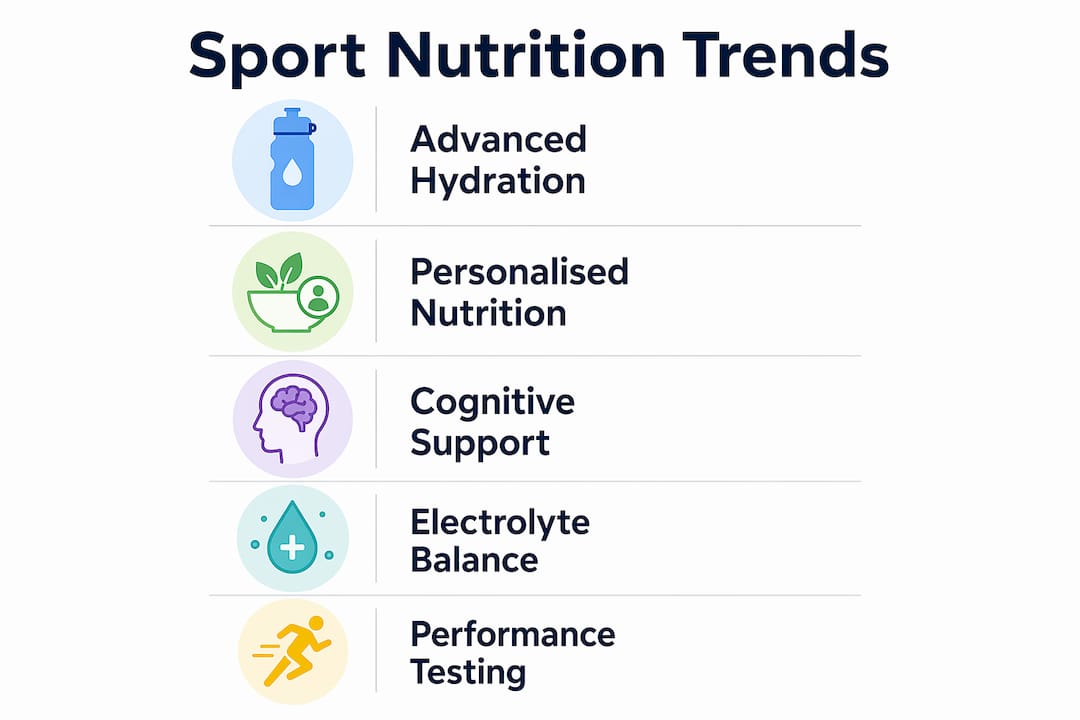
Sport nutrition trends in 2026 are defined by three converging priorities: advanced hydration science, personalised biological feedback, and mental performance support. Athletes who align with these shifts gain a measurable edge over those still following generic fuelling protocols from five years ago. The field has moved well beyond protein shakes and basic carbohydrate loading. Glanbia Nutrition, MDPI research, and practitioners like Meghann Featherstun are all pointing in the same direction: the importance of sports nutrition in 2026 lies in precision, not volume. If you train at high intensity, understanding why these trends matter is the difference between adapting and stagnating.

Why align with sport nutrition trends 2026
Aligning with current sports nutrition trends is not about chasing novelty. It is about applying the best available evidence to the specific demands of your training. The field has shifted in ways that directly affect what you put in your body before, during, and after a session.
Mental and cognitive performance is now a front-line concern. 69% recognise mental wellbeing as a priority shaping ingredient selection in sports nutrition, and approximately one in six US consumers actively seek cognitive support in sports drinks. That number reflects a genuine shift in how athletes think about performance. Focus, stress resilience, and mood stability during hard training blocks are no longer soft metrics.
Advanced hydration has moved from a background concern to a central formulation priority. More than one in three consumers now want sports drinks with up to three times typical electrolytes, with specific ratios of sodium, potassium, magnesium, calcium, and chloride becoming standard expectations. Delivery formats have expanded too, with gummies, fast-dissolve powders, and ready-to-drink options giving athletes more flexibility around session timing.
Precision nutrition backed by nutrigenetics and microbiome profiling is scaling from research labs into retail environments. This means personalised recommendations based on your biology, not population averages.
Higher dosing strategies for caffeine (targeting 3 to 5 mg per kg of bodyweight), carbohydrate, and sodium are being formalised in practitioner guidance for athletes training in heat or at high intensity.
- Mental wellness ingredients: adaptogens, nootropics, and stress-regulating compounds
- Electrolyte-dense formats: gummies, fast-dissolve sachets, and high-sodium RTDs
- Nutrigenetic profiling: DNA-informed macronutrient and micronutrient targets
- Higher caffeine and carbohydrate dosing matched to session demands
- Fortified bars and functional snacks replacing single-nutrient supplements
Pro Tip: Before adding any trend-driven product to your stack, check whether it addresses a gap in your current nutrition. Trends only deliver value when they solve a real problem in your training.
How does aligning with 2026 hydration trends improve performance?
Hydration is the most underestimated performance variable in high-intensity sport. Most athletes know they need to drink. Far fewer know what to drink, when, and in what concentration.
The 2026 trend is clear: generic sports drinks with low electrolyte content are losing ground to formulations built around individual sweat rate and session conditions. Optimal electrolyte ratios now include sodium, potassium, magnesium, calcium, and chloride in proportions matched to physiological need rather than palatability. This matters because sweat composition varies significantly between athletes. A one-size-fits-all electrolyte product will under-serve a heavy sweater and over-serve someone with low sweat sodium.
Carbohydrate and electrolyte intake remains the evidence base for hydration during exercise. Controlled studies confirm that carbohydrate-electrolyte drinks support performance, but broader functional claims around inflammation or organ protection require context-specific evidence before you act on them. The practical implication: prioritise products with a clear hydration mechanism, not ones making vague recovery claims.
Testing your hydration plan during training, not on race day, is the standard recommendation from both Glanbia Nutrition and leading sports dietitians. Iterative testing in training allows you to identify the electrolyte concentration that works for your sweat rate, your environment, and your session length.
| Hydration approach | Best suited to |
|---|---|
| Standard electrolyte drink (low sodium) | Light sweaters, sessions under 60 minutes |
| High-electrolyte formulation (3× standard) | Heavy sweaters, sessions over 90 minutes, heat conditions |
| Fast-dissolve powder or gummy format | Athletes needing flexible, portable dosing mid-session |
| Carbohydrate-electrolyte combined drink | Endurance efforts requiring simultaneous fuel and fluid |
For Hyrox athletes and those doing repeated high-intensity intervals, the electrolyte replenishment strategy you use mid-session can determine whether your final rounds hold or collapse. That is not a marginal gain. It is a structural performance factor.
Why is personalised nutrition critical for athletes in 2026?
Personalised nutrition is the most significant structural shift in sports dietetics in a decade. It replaces population-level averages with individual biological data, and the results are measurable.
The GENIE study, published in MDPI’s Nutrients, followed 1,177 participants through a personalised shopping programme integrating nutrigenetics and gut microbiome profiling. 71% followed personalised recommendations, and microbiome diversity increased by approximately 70% within one month. Engagement session times exceeded seven minutes, which is unusually high for a digital nutrition platform. This tells you something important: when recommendations feel relevant to your biology, you act on them.
The practical application for athletes is not that you need a full genomic workup before your next training block. It is that biological markers guide better choices than generic advice does. Blood markers, microbiome proxies, and even basic sweat testing give you a feedback loop that generic nutrition plans cannot replicate.
| Data source | What it tells you | Practical application |
|---|---|---|
| Nutrigenetics | How your genes influence nutrient metabolism | Adjust fat, carbohydrate, and micronutrient targets |
| Microbiome profiling | Gut bacteria diversity and function | Prioritise prebiotic and probiotic foods or supplements |
| Blood markers | Deficiencies, inflammation, hormonal status | Correct specific gaps rather than broad supplementation |
| Sweat testing | Sodium and electrolyte loss rate | Calibrate electrolyte products to your actual losses |
The limitation worth naming: precision nutrition services vary widely in quality. Some retail-integrated platforms use validated multi-omics data. Others use superficial questionnaires dressed up as personalisation. The distinction matters. Look for services that connect recommendations to measurable outcomes, not just food preference profiles.
Pro Tip: Start with blood markers before investing in microbiome or genetic testing. Iron, vitamin D, and ferritin deficiencies are common in high-intensity athletes and correcting them produces faster, more tangible results than most trend-driven supplements.
How should athletes evaluate and implement nutrition trends?
Not every trend that reaches your social feed deserves space in your nutrition plan. The ability to filter signal from noise is itself a performance skill.
-
Audit your foundations first. Total energy intake, protein adequacy, and hydration status are the non-negotiables. Nutrition must suit athlete characteristics, sport type, and environmental context before any supplement layer adds value. If your energy availability is low, no adaptogen or nootropic will compensate.
-
Apply dosing standards to stimulant and electrolyte trends. Caffeine at 3 to 5 mg per kg of bodyweight and higher sodium formulations are supported by practitioner guidance for athletes training in heat or at high intensity. These are not arbitrary numbers. They reflect the threshold at which measurable performance effects appear.
-
Treat every new product as a hypothesis. Integrating trends carefully means testing them during training sessions, not competitions. One variable at a time. If a new electrolyte formulation improves your output over three sessions, it earns its place. If it does not, you have your answer without having compromised a race.
-
Distinguish hydration products from ergogenic claims. Functional beverage claims around inflammation reduction or organ protection require context-specific evidence. A product that genuinely replaces sweat losses is valuable. One that promises systemic recovery benefits without controlled trial data is marketing.
-
Work with a sports dietitian for complex periodisation. The top nutrition trends for athletes in 2026 are sophisticated enough that self-implementation has real limits. A registered sports dietitian can map nutrigenetic data, training load, and environmental factors into a plan that a product label cannot.
The future of sports nutrition belongs to athletes who combine curiosity about new developments with disciplined evaluation. Trends are useful inputs, not instructions.
Key takeaways
Aligning with sport nutrition trends in 2026 improves performance when athletes apply advanced hydration, personalised biological data, and evidence-based dosing to their specific training demands.
| Point | Details |
|---|---|
| Mental wellness is now a nutrition priority | Cognitive support ingredients are shaping product development and athlete purchasing decisions. |
| High-electrolyte formulations outperform generic drinks | Over one in three athletes want up to three times standard electrolyte content matched to sweat rate. |
| Personalised nutrition drives adherence | The GENIE study found 71% followed personalised recommendations, with measurable microbiome improvement in one month. |
| Test trends during training, not competition | Iterative testing in training sessions is the only reliable way to validate whether a trend benefits your specific physiology. |
| Foundations come before supplements | Energy availability, protein intake, and hydration must be solid before trend-driven products add meaningful value. |
What I’ve actually learned about following nutrition trends
I have watched athletes spend significant money on trend-driven products while their energy intake was chronically low and their hydration was an afterthought. The trends themselves were not the problem. The sequencing was wrong.
The most useful frame I have found is to treat every new development in sports nutrition as a testable hypothesis. Not a guaranteed benefit, not marketing noise. A hypothesis. You run the experiment during training, you measure the outcome against something concrete, and you decide based on data rather than enthusiasm.
What I find genuinely exciting about 2026 is that personalised nutrition has crossed from theoretical to practical. The precision nutrition approach using blood markers and microbiome data is no longer reserved for elite programmes with large budgets. It is accessible, and when it is connected to measurable outcomes rather than generic food scores, it changes behaviour in ways that generic advice simply does not.
On hydration specifically: the shift toward higher-electrolyte formulations is one of the most evidence-grounded trends of the cycle. But the nuance that gets lost in marketing is that individual sweat rate variability means the right concentration for you is not the same as the right concentration for your training partner. The electrolyte workflow you build should reflect your physiology, your session type, and your environment. Not a product label.
The athletes I see making the most consistent progress are not the ones chasing every new ingredient. They are the ones who have locked in their foundations and use emerging trends selectively, with a clear rationale for each addition.
— Tom
How Useinterval supports your 2026 nutrition strategy
Useinterval’s Starter Bundle is built around exactly the trends this article covers: advanced electrolyte formulations using natural ingredients, and pre-workout support calibrated for high-intensity training. If you are ready to move beyond generic products and start building a nutrition stack that reflects 2026 standards, the Starter Bundle is the most direct way to do it. Both products are designed for athletes who train hard and want their nutrition to match. You can explore the full formulation and what it covers on the product page and see how it fits your current training demands.
FAQ
What are the top sport nutrition trends for athletes in 2026?
The leading trends are advanced hydration with higher electrolyte concentrations, personalised nutrition using nutrigenetics and microbiome data, cognitive performance ingredients, and higher-dose caffeine and carbohydrate formulations matched to training intensity.
How much caffeine should athletes use in 2026?
Practitioner guidance targets 3 to 5 mg of caffeine per kg of bodyweight for performance benefits, with individual tolerance assessed during training rather than competition.
Does personalised nutrition actually improve performance?
The GENIE study found that 71% of participants followed personalised dietary recommendations, with microbiome diversity increasing by approximately 70% within one month, demonstrating measurable biological impact beyond adherence alone.
How do I know which hydration product suits my sweat rate?
Test different electrolyte concentrations during training sessions across varying conditions. Heavy sweaters and athletes training in heat typically benefit from formulations with up to three times standard electrolyte content, particularly sodium.
Should I follow every new sports nutrition trend?
No. Evaluate each trend against your foundational nutrition status first. Apply new products as single-variable tests during training, and retain only those that produce a measurable improvement in your output or recovery.