


Electrolyte synergy: optimise performance for female athletes
TL;DR:
- Female hormonal cycles significantly affect electrolyte needs, especially during the luteal phase.
- Multi-electrolyte blends outperform single-mineral solutions by enhancing hydration and muscle function.
- Personalized, cycle-aware electrolyte strategies improve performance, recovery, and prevent deficiencies.
Your hormonal cycle is quietly reshaping your electrolyte needs every single week, and most generic sports drinks were never designed with that in mind. For female athletes aged 30 to 50 competing in high-intensity disciplines, this gap between standard guidance and biological reality is not just inconvenient; it can actively undermine your performance and your recovery. Electrolyte synergy, the strategic combination of sodium, potassium, and magnesium working in concert, is where real gains are made. This article breaks down the science, gives you cycle-specific numbers, and helps you choose the right blend for your training demands.
Table of Contents
- Why electrolyte synergy matters for female athletes
- Hormonal cycles and their impact on electrolyte requirements
- Interplay between sodium, potassium, magnesium: the science of synergy
- Choosing the right blend: single versus multi-electrolyte solutions
- What most electrolyte guides miss for female athletes
- Take your performance further with tailored electrolyte support
- Frequently asked questions
Key Takeaways
| Point | Details |
|---|---|
| Hormonal cycles matter | Female athletes should adjust electrolyte intake based on menstrual phases for optimal hydration and performance. |
| Synergy boosts results | Combining sodium, potassium, and magnesium supports better rehydration and reduces cramps compared to single solutions. |
| Personalisation is vital | Tailoring electrolyte blends to your cycle, sport, and preferences can maximise athletic outcomes and prevent common pitfalls. |
| Carbs are optional | While carbohydrates can enhance absorption, natural or low-carb blends suit those seeking performance without extra sugar. |
Why electrolyte synergy matters for female athletes
The term “electrolyte synergy” is not yet pinned down in a single textbook definition, but the concept is well supported by research showing that multi-electrolyte blends outperform single-mineral or plain-water approaches for rehydration and performance. More importantly, female-specific hormonal nuances mean that personalised benchmarks matter far more than any one-size-fits-all formula on a shop shelf.
What does synergy actually mean in practice? It means that sodium, potassium, and magnesium do not simply add up; they amplify each other’s effects when taken together in the right ratios. Sodium drives fluid into your cells. Potassium helps maintain cellular pressure and nerve signalling. Magnesium supports enzymatic reactions that govern muscle contraction and energy production. Remove or reduce any one of these, and the others become less effective.
For female athletes, the stakes are particularly high because:
- Hormonal fluctuations change how efficiently your kidneys retain sodium
- Sweat composition varies across the menstrual cycle, not just between individuals
- High-intensity exercise compounds fluid losses at a rate that amplifies any existing deficiency
- Generic sports drinks are typically formulated for male physiology, which processes electrolytes differently
Follow a structured electrolyte workflow for female athletes and you will immediately see how a phased, cycle-aware approach differs from simply mixing a sachet into water before training.
“Relying on thirst alone to guide electrolyte intake during high-intensity training is like navigating by your phone’s battery warning light. By the time the signal appears, you are already in deficit.”
Pro Tip: Track your training performance notes alongside your cycle phase for at least four weeks. Patterns in cramp frequency, perceived exertion, and recovery speed will reveal a great deal about your personal electrolyte demands.
The practical implication of all this is that boosting performance with electrolytes requires a dynamic strategy, not a static one. Your fluid needs in week one of your cycle are genuinely different from your needs in week three. Once you accept that, the whole conversation about hydration shifts from guesswork to precise, informed decision-making.
Hormonal cycles and their impact on electrolyte requirements
Your menstrual cycle is divided broadly into the follicular phase (days 1 to 14) and the luteal phase (days 15 to 28). During the luteal phase, progesterone rises sharply. This is where things get complicated for performance and for hydration.
Progesterone acts on renal receptors in a way that promotes sodium excretion. Research from the International Society of Sports Nutrition confirms that luteal phase hormonal fluctuations can increase sodium loss by up to 30% in active women, meaningfully raising the risk of hyponatremia (dangerously low blood sodium) during prolonged or intense exercise. For athletes already pushing their limits, this is not a marginal concern.
Here is how your electrolyte priorities shift across the cycle:
| Cycle phase | Key hormonal change | Electrolyte priority | Suggested sodium intake (per hour of exercise) |
|---|---|---|---|
| Follicular (days 1 to 14) | Oestrogen dominant | Balanced sodium and potassium | 700 to 1000mg |
| Ovulation (around day 14) | LH surge | Maintain baseline intake | 700 to 1000mg |
| Luteal (days 15 to 28) | Progesterone rises | Higher sodium and magnesium | 1000 to 1500mg |
| Late luteal/PMS (days 24 to 28) | Oestrogen and progesterone drop | Magnesium priority for cramps | 1000 to 1500mg plus extra Mg |
The risk of hyponatremia for female athletes is not theoretical. Hyponatremia can cause fatigue, nausea, confusion, and in severe cases, life-threatening swelling of the brain. During the luteal phase, the window for this to occur narrows considerably because your body is already excreting more sodium than usual.
Practical recommendations for cycle-adjusted intake include:
- Increase sodium to 1000 to 1500mg per hour during any intense session in your luteal phase
- Add a dedicated magnesium source in the week before menstruation to reduce cramping and support sleep quality, which directly affects recovery
- Monitor urine colour more closely during the luteal phase; pale yellow is optimal, but many women find they need more fluid and electrolytes than they expect during this window
- Avoid over-hydrating with plain water, which can further dilute already-compromised sodium levels
Pro Tip: Keep a small pocket-sized note or use a cycle-tracking app to flag your luteal phase days before events or heavy training blocks. Preparing your electrolyte intake in advance, rather than reacting to symptoms, keeps you ahead of the problem.
There are excellent replenishment tips for women available that go deeper into practical daily habits. The core message is this: your hormones are not an obstacle to performance. They are data. When you learn to read them and adjust your fuelling accordingly, they become one of your most powerful tools.
Interplay between sodium, potassium, magnesium: the science of synergy
Understanding why these three minerals work better together requires a brief look at the mechanism. Sodium and potassium maintain the electrochemical gradient across your cell membranes, which is essential for nerve conduction and muscle contraction. Magnesium acts as a cofactor in more than 300 enzymatic reactions, including those that produce ATP (adenosine triphosphate, your body’s primary energy currency).

When you deplete any one of these during intense exercise, the entire system becomes less efficient. Cramps, fatigue, reduced power output, and poor heat tolerance are all downstream effects of this depletion. The solution is not simply adding more of one; it is maintaining the balance between all three.
Empirical evidence makes this concrete. A study comparing different rehydration drinks found that a high sodium and potassium drink (480mg sodium and 1120mg potassium per litre) produced a net fluid balance of -0.4kg post-dehydration. A high-sodium-only drink yielded -0.7kg, and plain water produced a urine output of 1591mL versus only 1260mL in the combined sodium and potassium group. The combined approach was simply better at keeping fluid inside the body where it belongs.
What this means in real terms:
- Your body retained significantly more fluid with the sodium and potassium combination than with either single-mineral or water-only approaches
- Lower urine output means less time losing fluid during training and competition
- Higher plasma osmolality (a measure of blood concentration) indicates your body is maintaining optimal conditions for performance
Here is how the three major electrolytes compare in their primary roles:
| Electrolyte | Primary function | Performance impact when depleted | Sources in natural supplements |
|---|---|---|---|
| Sodium | Fluid balance, nerve conduction | Cramping, fatigue, hyponatremia | Sea salt, sodium citrate |
| Potassium | Cellular pressure, heart rhythm | Weakness, irregular heartbeat | Potassium chloride, coconut water extract |
| Magnesium | Enzyme function, muscle relaxation | Cramps, poor sleep, reduced power | Magnesium citrate, magnesium glycinate |
Following a balanced electrolyte blend approach rather than supplementing one mineral at a time is not just convenient; it reflects how your physiology actually works. The essential electrolyte tips for female athletes consistently point toward multi-mineral strategies as the evidence-backed standard.
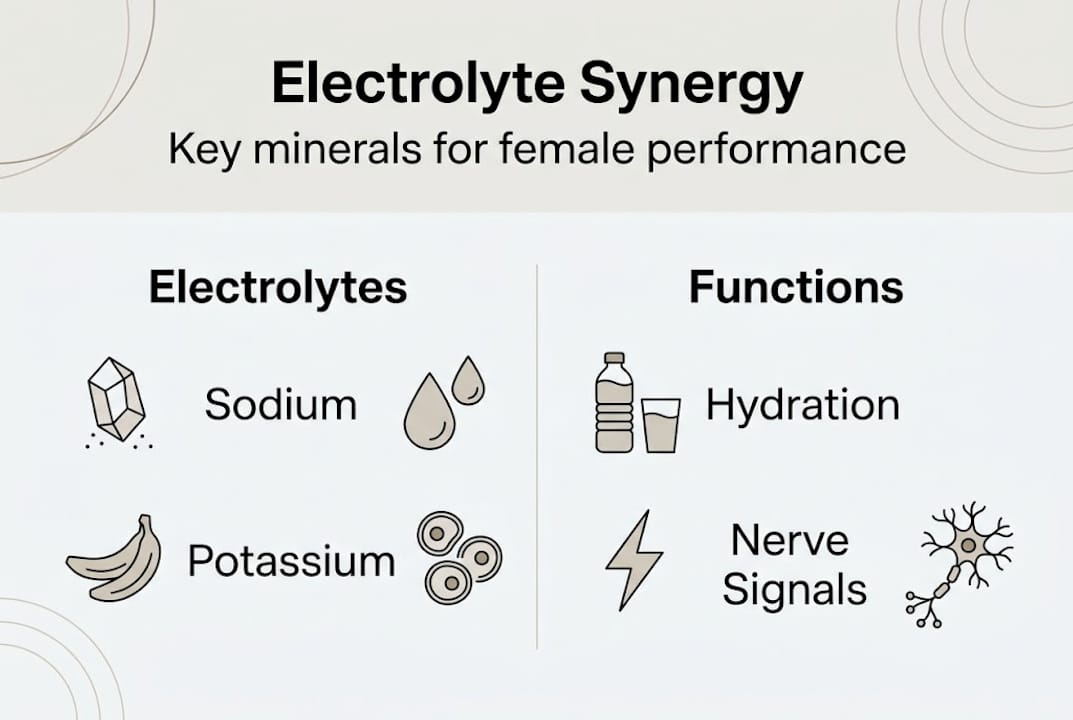
Magnesium deserves particular attention for women in their 30s and 40s. Studies consistently show that this mineral is commonly deficient in athletic populations, and its role in managing PMS symptoms, supporting deep sleep, and reducing muscular tension makes it especially relevant for training blocks that fall during the late luteal phase.
Choosing the right blend: single versus multi-electrolyte solutions
Not all electrolyte products are built the same way, and the difference between a well-designed blend and a cheaply formulated sachet can directly affect your performance. Understanding the landscape of options helps you make a confident, informed choice rather than relying on marketing language.
Here is a clear breakdown of what each approach offers:
Single-electrolyte solutions (for example, sodium only)
- Simple to dose and understand
- Can be effective for very short, intense efforts where only one electrolyte has been substantially depleted
- Often inadequate for sessions longer than 60 minutes
- Risk leaving potassium and magnesium deficits unaddressed
Multi-electrolyte blends
- Mimic the body’s actual sweat composition more closely
- Support both immediate hydration and longer-term muscle function
- Address the full spectrum of losses during extended or high-intensity sessions
- Generally superior for female athletes managing hormonal variability
Carb-enhanced blends
“Carbohydrates improve electrolyte absorption through the sodium-glucose cotransport mechanism, but they also add sugar and calories that may not fit every athlete’s nutritional goals.”
Carb-enhanced blends can be useful for endurance efforts lasting over 90 minutes, where glycogen replenishment becomes a performance factor. However, for athletes prioritising natural ingredients and lower calorie intake, or those managing blood sugar sensitivity, a carb-free multi-electrolyte blend is the smarter choice.
How to select the right product for your training:
- Check the sodium content first. Anything under 500mg per serving is unlikely to meet your needs during the luteal phase or during heavy sweat sessions.
- Look for potassium alongside sodium. A product without potassium is not offering true electrolyte synergy.
- Confirm magnesium is included. Even at lower doses (around 100 to 200mg), it contributes meaningfully to muscle function and cramp prevention.
- Scrutinise the ingredient list for artificial sweeteners and fillers. These add nothing to performance and may cause gut discomfort during competition.
- Match the blend to your training intensity and cycle phase. Higher sodium and magnesium during the luteal phase, balanced across the board during the follicular phase.
Optimising electrolyte mixing for your specific events takes this framework further, giving you concrete guidance on timing, concentration, and volume. And when you need something that works quickly during a demanding session, fast-acting natural electrolytes make the difference between finishing strong and hitting a wall.
Natural ingredient bases, such as sea salt, coconut water extract, and fruit-derived mineral sources, offer a cleaner alternative to synthetic formulas without sacrificing effectiveness. This matters for athletes who are deliberate about what they put in their bodies, particularly during competition preparation.
What most electrolyte guides miss for female athletes
Most electrolyte articles talk about what to take. Far fewer address when to take it and why that timing should shift every week. This is the gap that costs female athletes the most.
Generic guides assume a stable baseline. They give you one set of numbers and expect those to serve you through every training session, every week, every phase of your cycle. In reality, your physiology is not static. It is constantly adapting to hormonal signals that most sports nutrition research has only recently started to take seriously.
The insight that changed how we think about this at Interval is straightforward: your cycle is not a complication. It is a performance variable, just like sleep, nutrition, and training load. The athletes who treat it as one, and who track their responses and adjust accordingly, consistently outperform those who ignore it. Learn more about buffered electrolyte guidance to understand how formulation choices interact with this cycle-aware approach.
Theory and practice also diverge in one critical place: individual sweat rates and sodium concentrations vary enormously. One athlete might lose 1000mg of sodium per litre of sweat; another might lose over 2000mg. No chart can account for this. The real work is self-experimentation, journaling, and adjusting based on actual performance and recovery data. Personalised benchmarks, built on your own experience, will always outperform generic advice.
Take your performance further with tailored electrolyte support
Understanding the science is only the first step. The next is building a routine that actually reflects your unique needs, your cycle, your sport, and your goals.
At Interval, we formulate our electrolytes specifically for athletes who train hard and expect their supplements to keep up. Our blends use natural ingredients, are built around the multi-electrolyte synergy principle, and are designed with female physiology in mind. Whether you are preparing for a Hyrox event, a CrossFit competition, or simply pushing your weekly training to a higher standard, the Starter Bundle gives you a practical entry point to cycle-aware, performance-focused electrolyte support. Stop guessing with generic formulas and start fuelling with intention.
Frequently asked questions
How does electrolyte synergy improve hydration compared to water?
Electrolyte synergy enhances rehydration by combining sodium and potassium, which reduces urine output and improves net fluid balance more effectively than water alone; research shows a high sodium and potassium drink retained significantly more fluid than plain water in post-dehydration testing.
Why do female athletes need to adjust electrolyte intake during their cycle?
Hormonal changes, especially in the luteal phase, increase sodium loss by up to 30%, requiring higher sodium and magnesium intake to prevent dehydration, performance dips, and muscle cramps.
Is a single-electrolyte solution enough for female athletes?
Multi-electrolyte blends generally outperform single solutions because single-electrolyte approaches fail to address the full spectrum of mineral losses during high-intensity exercise, leaving gaps in hydration and muscle function.
Should I avoid carbs in my electrolyte drinks?
Carbohydrates can enhance electrolyte absorption via the sodium-glucose cotransport mechanism, but they also add sugar and calories; opt for natural, low-carb blends if managing calorie intake or blood sugar sensitivity is a priority for your training.