


Prevent athletic burnout: guide for female athletes
You’ve just finished another high-intensity session, but instead of feeling accomplished, you’re exhausted and questioning why you even started. Before assuming it’s just perimenopause playing havoc with your motivation, consider this: athletic burnout shares many symptoms with hormonal changes, making it difficult to identify what’s truly affecting your performance. Understanding the difference between burnout and menopause symptoms empowers you to take targeted action, whether that means adjusting your training load, seeking hormonal support, or both. This guide breaks down the causes, warning signs, and evidence-based prevention strategies specifically for female athletes aged 30 to 50 navigating high-intensity sport demands.
Table of Contents
- Key takeaways
- What is athletic burnout and its key symptoms
- Causes and risk factors of burnout in female athletes aged 30-50
- Approaches to prevention and management of athletic burnout
- Monitoring burnout and recognising nuanced factors in female athletes
- Explore Interval’s support for female athletes
- Frequently asked questions
Key Takeaways
| Point | Details |
|---|---|
| Burnout definition | Athletic burnout is a psychological syndrome characterised by emotional and physical exhaustion, a reduced sense of accomplishment, and sport devaluation that persists despite rest. |
| Menopause overlap | In women aged 30 to 50 burnout symptoms often resemble perimenopausal and menopausal effects, making recognition challenging. |
| Prevention focus | Prevention emphasises recovery, periodised training, nutrition, and psychosocial support tailored to midlife female athletes. |
| Cycle tracking guidance | Track mood and energy alongside menstrual cycle patterns or hormonal therapy timing to separate hormonal fluctuations from burnout indicators. |
What is athletic burnout and its key symptoms
Athletic burnout represents a psychological syndrome with three distinct dimensions: emotional and physical exhaustion, reduced sense of accomplishment, and sport devaluation. Unlike simple fatigue that resolves with a few rest days, burnout develops gradually through chronic stress and manifests as a persistent state of mental and physical depletion. The exhaustion component goes beyond normal tiredness after training. You might feel drained before sessions even begin, struggle to complete workouts you previously handled easily, or need significantly longer recovery periods between efforts.
The reduced sense of accomplishment dimension appears when you stop feeling satisfied with your athletic achievements, regardless of actual performance outcomes. You might dismiss personal bests as meaningless, feel inadequate despite objective improvements, or constantly compare yourself unfavourably to other athletes. This psychological shift often coincides with sport devaluation, where activities you once loved become obligations you resent. Training sessions feel like chores rather than opportunities, competition anxiety replaces excitement, and you increasingly question why you continue participating.
For female athletes aged 30 to 50, recognising these symptoms becomes complicated because they overlap significantly with perimenopausal and menopausal effects. Hormonal fluctuations can independently cause fatigue, mood changes, reduced motivation, and performance declines, making it challenging to distinguish whether you’re experiencing burnout, hormonal transitions, or both simultaneously. Understanding overtraining syndrome prevention helps differentiate these conditions and guides appropriate intervention strategies.
Pro Tip: Track your symptoms alongside your menstrual cycle patterns or hormonal therapy timing to identify whether mood and energy fluctuations correlate with hormonal changes or persist independently, suggesting burnout as the primary issue.
Key warning signs that distinguish burnout from temporary fatigue include:
- Persistent exhaustion that doesn’t improve with rest days or reduced training volume
- Loss of enjoyment in activities that previously brought satisfaction and excitement
- Cynical attitudes towards coaches, teammates, or the sport itself
- Declining performance despite maintained or increased training effort
- Withdrawal from social aspects of sport and increased isolation
- Sleep disturbances unrelated to training timing or intensity
“Burnout isn’t just about being tired. It’s a fundamental shift in how you relate to your sport, characterised by emotional exhaustion, cynicism, and a profound sense of ineffectiveness that persists despite rest.”
Causes and risk factors of burnout in female athletes aged 30-50
Multiple interconnected factors contribute to athletic burnout, with some risks particularly pronounced for midlife female athletes. Understanding these causes helps you identify vulnerabilities in your current training approach and life circumstances. The primary contributors include excessive training loads without adequate recovery, perfectionist tendencies that drive unsustainable effort levels, chronic stress from balancing athletic pursuits with work and family responsibilities, inadequate nutrition relative to training demands, and insufficient psychosocial support from coaches, teammates, or family members.

For women aged 30 to 50, hormonal changes during perimenopause and menopause significantly heighten burnout risk by compromising recovery capacity, sleep quality, and intrinsic motivation. Declining estrogen levels affect multiple physiological systems simultaneously. You may experience increased inflammation that prolongs muscle soreness, reduced bone density that raises injury risk, disrupted thermoregulation causing uncomfortable temperature fluctuations during exercise, and mood instability that amplifies stress responses. These hormonal shifts create a perfect storm where training loads that previously felt manageable suddenly become overwhelming.
The overlap between menopausal symptoms and burnout indicators complicates early detection. Fatigue, irritability, reduced motivation, and performance declines appear in both conditions, making it easy to attribute burnout symptoms solely to hormonal changes and miss the psychological syndrome developing underneath. This misattribution often delays appropriate intervention, allowing burnout to progress to more severe stages before recognition occurs.
Identifying your specific risk factors enables targeted prevention strategies:
- Assess your current training load relative to recovery capacity, considering that hormonal changes may have reduced your ability to handle previous volumes
- Evaluate perfectionist tendencies and whether you set unrealistic performance expectations that create chronic psychological stress
- Examine work-life balance and identify areas where competing demands create unsustainable pressure
- Review nutritional intake to ensure adequate energy availability, particularly essential minerals for athletes that support hormonal function and recovery
- Consider the quality of psychosocial support available from coaches, training partners, family members, and healthcare providers
Pro Tip: Calculate your energy availability by tracking food intake and exercise expenditure for one week. Many midlife female athletes unknowingly underfuel, creating a physiological stress that amplifies burnout risk independently of training volume.
Recognising both psychological contributors like perfectionism and physiological factors such as hormonal decline allows you to address burnout risk from multiple angles simultaneously. Comprehensive sports nutrition for high intensity training becomes especially critical during this life stage, as nutritional requirements shift alongside hormonal changes.
Approaches to prevention and management of athletic burnout
Effective burnout prevention requires a multifaceted approach addressing training structure, recovery practices, nutrition, and psychological wellbeing. Research demonstrates that prioritising recovery and implementing periodised training substantially reduces burnout risks, particularly for midlife female athletes managing hormonal transitions alongside high-intensity sport demands.
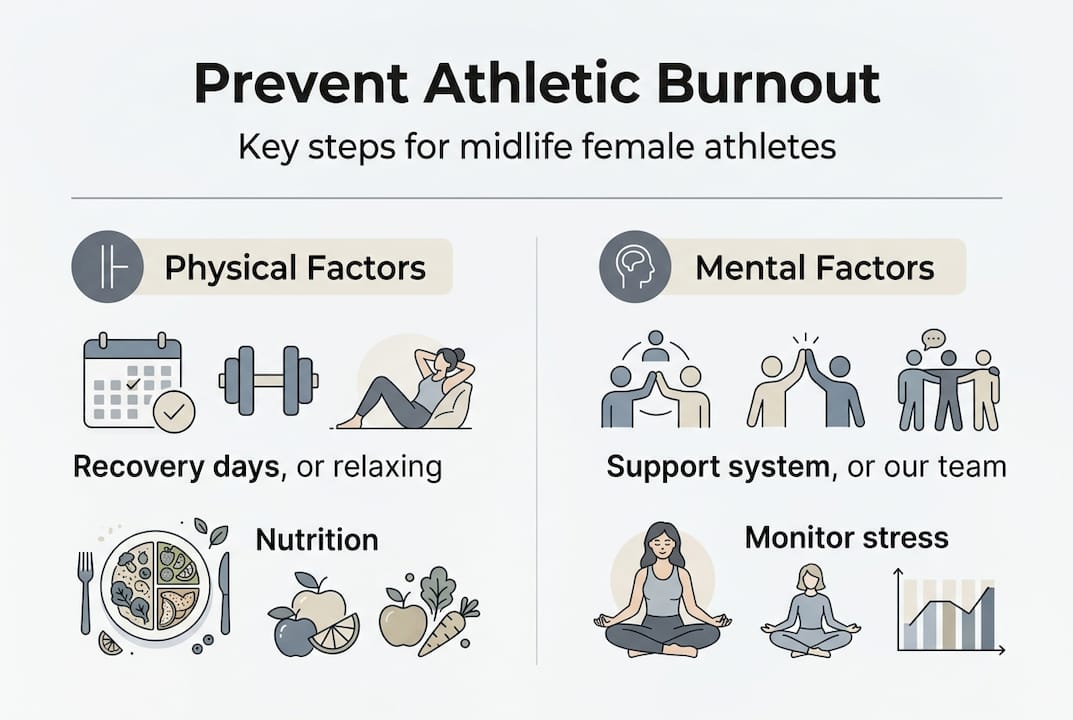
Recovery prioritisation means strategically programming rest days and lower intensity sessions rather than treating them as optional add-ons when you feel tired. Schedule at least two complete rest days weekly, with one additional day dedicated to active recovery at conversational pace. During perimenopause and menopause, you may need to increase rest frequency as hormonal fluctuations impair recovery speed. Listen to your body’s signals rather than rigidly following predetermined plans when fatigue persists beyond normal patterns.
Periodised training structures your programme into distinct phases with varying intensity and volume, preventing the chronic high-stress load that precipitates burnout. A practical framework for midlife female athletes involves an 80/20 split: 80% of training at low to moderate intensity where you can maintain conversation, and 20% at high intensity where speech becomes difficult. This approach builds aerobic capacity whilst minimising excessive physiological stress that compounds hormonal challenges.
The WHIP protocol offers a particularly effective framework for midlife women: Walking for low-intensity aerobic work, Heavy weights for strength maintenance and bone density, Intensity for cardiovascular fitness, and Plyometrics for power development. This balanced approach addresses multiple fitness components without overemphasising any single training stress.
Nutritional guidelines for burnout prevention include:
- Consume 1.6 to 2.2 grams of protein per kilogram of body weight daily to support muscle recovery and hormone production
- Maintain energy availability above 30 kilocalories per kilogram of fat-free mass to prevent relative energy deficiency
- Prioritise whole food sources of carbohydrates around training sessions to support performance and recovery
- Include adequate dietary fats, particularly omega-3 fatty acids, to support hormonal function and reduce inflammation
- Stay consistently hydrated, as dehydration amplifies fatigue perception and impairs thermoregulation
Pro Tip: Time your highest intensity sessions for the follicular phase of your menstrual cycle when estrogen levels peak, if you’re still cycling. Post-menopausal athletes should schedule intense efforts when energy and motivation naturally feel highest.
Sleep quality and quantity directly influence burnout risk, yet hormonal changes often disrupt sleep patterns. Establish consistent sleep-wake times, create a cool dark sleeping environment, limit screen exposure before bed, and consider magnesium supplementation if sleep disturbances persist. Mindfulness practices and stress management techniques reduce psychological burnout contributors. Even 10 minutes daily of meditation, deep breathing, or progressive muscle relaxation can significantly lower perceived stress levels.
Psychosocial support from coaches, training partners, and family members buffers against burnout by providing emotional resources during challenging periods. Seek coaches who adopt autonomy-supportive rather than controlling feedback styles, as research links coaching approach to burnout progression rates. Build training partnerships with athletes who share similar goals and values, creating accountability without unhealthy comparison.
| Training approach | Benefits for burnout prevention | Considerations for midlife athletes |
|---|---|---|
| HIIT (high-intensity interval training) | Efficient cardiovascular gains, improved insulin sensitivity, enhanced mental focus | May increase anxiety and overtraining risk if volume too high; limit to 2-3 sessions weekly |
| Steady-state aerobic | Builds aerobic base, promotes recovery, reduces stress hormones | Essential foundation; should comprise 80% of training volume |
| Strength training | Maintains muscle mass, supports bone density, improves metabolic health | Critical during menopause; include 2-3 sessions weekly with progressive overload |
| Active recovery | Facilitates blood flow, reduces muscle soreness, provides psychological break | Underutilised by many athletes; schedule intentionally rather than skipping |
Understanding high-intensity interval training benefits and risks helps you optimise intensity distribution. Whilst HIIT offers significant fitness gains, excessive volume creates physiological stress that compounds burnout risk, particularly when combined with inadequate recovery and hormonal challenges. Similarly, strategies to enhance athletic focus naturally support the psychological resilience needed to prevent burnout’s motivational decline.
Monitoring burnout and recognising nuanced factors in female athletes
Proactive monitoring enables early detection of burnout progression before symptoms become severe, allowing timely intervention. Several validated tools and biomarkers help track your burnout risk status. The Athlete Burnout Questionnaire (ABQ) assesses the three core dimensions through a standardised 15-item survey, providing quantifiable scores for emotional exhaustion, reduced accomplishment, and sport devaluation. Complete this assessment monthly to identify concerning trends before they escalate.
Physiological biomarkers offer objective measures complementing psychological assessments. Cortisol and heart rate variability patterns indicate stress load and recovery status. Elevated morning cortisol levels or reduced HRV suggest inadequate recovery and heightened burnout risk. Many wearable devices now track HRV, making this biomarker accessible for regular monitoring. Declining HRV trends over several weeks warrant training load reduction regardless of subjective fatigue perception.
Coaching feedback style significantly influences burnout progression rates. Autonomy-supportive coaching that emphasises choice, acknowledges feelings, and provides rationale for training decisions protects against burnout. Conversely, controlling coaching characterised by pressure, criticism, and inflexibility accelerates burnout development. Evaluate whether your coaching relationship supports or undermines your psychological wellbeing, and seek changes if the latter applies.
Grit, defined as perseverance and passion for long-term goals, shows a complex relationship with burnout. Whilst grit can drive achievement, excessive grit may prevent appropriate response to burnout warning signs, causing athletes to push through when rest is needed. Monitor whether your determination to persist crosses into counterproductive stubbornness that ignores clear distress signals.
Key monitoring indicators to track regularly:
- Resting heart rate trends (sustained elevation suggests inadequate recovery)
- Training session completion rates (declining ability to finish planned workouts)
- Motivation levels before and after training (persistent low motivation warrants concern)
- Sleep quality and duration (chronic sleep disturbances indicate stress overload)
- Mood stability and emotional responses (increased irritability or emotional flatness)
- Performance metrics relative to perceived effort (declining efficiency suggests burnout)
For midlife female athletes, integrated hormonal and psychological screening provides the most comprehensive burnout assessment. Hormonal testing can identify whether symptoms stem primarily from menopausal transitions or psychological burnout, guiding targeted interventions. Work with healthcare providers familiar with both sports medicine and women’s health to develop monitoring protocols addressing your specific circumstances.
| Monitoring tool | What it measures | Frequency | Action threshold |
|---|---|---|---|
| Athlete Burnout Questionnaire | Emotional exhaustion, reduced accomplishment, sport devaluation | Monthly | Scores increasing over 2-3 months |
| Heart rate variability | Autonomic nervous system recovery status | Daily | Sustained 10% decline from baseline |
| Morning resting heart rate | Overall physiological stress load | Daily | 5+ beats above normal for 3+ days |
| Sleep quality tracking | Recovery adequacy, stress levels | Daily | Less than 7 hours or poor quality for 5+ nights |
| Training completion rate | Ability to meet planned workload | Weekly | Completing less than 80% of sessions |
| Hormonal panel | Estrogen, progesterone, cortisol, thyroid | Every 6-12 months | Levels outside optimal ranges |
Different training types affect burnout risk differently for midlife women. High-volume training without adequate intensity variation creates chronic moderate stress that accumulates over time. Excessive HIIT volume spikes stress hormones and anxiety levels, particularly when recovery is insufficient. Balanced programmes incorporating the WHIP protocol elements distribute training stress across multiple systems, preventing overload in any single area.
Understanding what is overtraining syndrome prevention helps you distinguish between burnout and its physiological counterpart, as these conditions often co-occur and require slightly different management approaches.
Explore Interval’s support for female athletes
Navigating high-intensity training whilst managing burnout risks requires more than just knowledge. It demands practical support tailored to your specific needs as a midlife female athlete. The Starter Bundle provides natural pre-workout and electrolyte support designed specifically for high-intensity sport demands, helping you maintain performance without relying on artificial stimulants that can worsen anxiety and sleep disturbances.
Combining evidence-based training approaches with proper nutritional support creates a foundation for sustainable athletic performance. Explore comprehensive guides on overtraining syndrome prevention and sports nutrition for high intensity training to build a complete strategy addressing both physical and psychological aspects of burnout prevention. These resources complement your training programme with practical tools supporting long-term athletic wellbeing.
Frequently asked questions
What is athletic burnout?
Athletic burnout is a psychological syndrome characterised by three core dimensions: emotional and physical exhaustion, reduced sense of accomplishment, and sport devaluation. Unlike temporary fatigue that resolves with rest, burnout develops gradually through chronic stress and persists despite recovery attempts. It fundamentally changes how you relate to your sport, replacing enjoyment with obligation and satisfaction with cynicism.
How does burnout differ from overtraining syndrome?
Overtraining syndrome primarily involves physiological dysfunction from excessive training load without adequate recovery, manifesting as performance decrements, hormonal disruptions, and immune suppression. Burnout centres on psychological and emotional exhaustion, though the two conditions often co-occur. Overtraining focuses on the body’s physical response to training stress, whilst burnout emphasises the mind’s psychological response to chronic sport-related pressure.
How does menopause affect the risk of athletic burnout?
Declining estrogen levels during perimenopause and menopause impair recovery capacity, disrupt sleep quality, increase inflammation, and affect mood stability. These hormonal changes make previously manageable training loads feel overwhelming and reduce intrinsic motivation for sport participation. The symptom overlap between menopausal effects and burnout indicators creates confusion, often delaying recognition and appropriate intervention for burnout when it develops alongside hormonal transitions.
What are practical ways to prevent or manage athletic burnout?
Prioritise recovery by scheduling at least two complete rest days weekly and one active recovery session at conversational pace. Implement periodised training with 80% of volume at low to moderate intensity and only 20% at high intensity. Maintain adequate nutrition with 1.6 to 2.2 grams of protein per kilogram body weight daily and sufficient energy availability above 30 kilocalories per kilogram fat-free mass. Seek autonomy-supportive coaching and build psychosocial support networks with training partners and family members who understand your athletic goals.
When should I seek professional help for athletic burnout?
Consult healthcare professionals if exhaustion and motivation loss persist for more than two weeks despite reduced training load and increased recovery. Seek integrated assessment from providers familiar with both sports medicine and women’s health when you cannot distinguish whether symptoms stem from burnout, hormonal changes, or both. Professional guidance becomes essential when burnout symptoms interfere with daily life beyond sport, cause significant distress, or include thoughts of completely quitting activities you previously loved.