


What is a balanced supplement? Natural support for active women
TL;DR:
- Women engaging in high-intensity training need tailored, clinically relevant supplement doses for optimal performance.
- Key nutrients include iron, vitamin D, magnesium, omega-3s, creatine, and high-quality protein.
- Personalised testing and food-based strategies are essential for safe, effective supplementation.
Most women training at high intensity assume their generic multivitamin has them covered. It doesn’t. Women aged 30 to 50 pushing hard through HIIT, CrossFit, competitive running, or team sports have physiological demands that shift constantly, influenced by hormonal fluctuations, training load, and the natural changes that come with perimenopause. A grab-and-go multivitamin from the supermarket simply wasn’t designed with you in mind. This guide breaks down exactly what a balanced supplement is, why it matters for your performance and recovery, and how to build a stack that actually works.
Table of Contents
- What does ‘balanced supplement’ mean for active women?
- How do balanced supplements support intense training and recovery?
- Personalisation, safety, and the food-first principle
- Building your balanced stack: practical tips for women in high-intensity sports
- The overlooked reality: why balanced supplements are only powerful when tailored
- Find your balanced foundation with Interval
- Frequently asked questions
Key Takeaways
| Point | Details |
|---|---|
| Definition matters | A ‘balanced supplement’ for active women means an evidence-based, targeted formula—not a generic pill. |
| Performance and recovery | Key nutrients like iron, creatine, and protein can boost strength, muscle and endurance when tailored for women in intense training. |
| Customise safely | Always test for deficiencies, prioritise real food, and use well-tested supplements to minimise risks and maximise results. |
| Practical stack building | Follow step-by-step guidance to create a supplement routine suited to your life stage, goals and sport demands. |
| Individual approach wins | Generic approaches don’t work—personalisation and continuous adjustment are essential for success. |
What does ‘balanced supplement’ mean for active women?
The phrase “balanced supplement” gets used loosely, and that vagueness costs women real results. For active women aged 30 to 50, a balanced supplement is not simply a product with a long ingredients list. According to nutritional science, a comprehensive multivitamin-mineral formula provides essential vitamins, minerals, and bioactive compounds at clinically relevant doses to fill dietary gaps without excess. Every word in that definition matters.
Generic over-the-counter multivitamins are formulated for the average sedentary adult. They rarely account for the iron losses a menstruating athlete experiences, the elevated magnesium demand from intense muscular work, or the vitamin D needs of women training indoors through winter. A balanced supplement, by contrast, is built around your physiology and your training output.
Understanding high-intensity sports nutrition reveals just how wide that gap is. Here’s a quick comparison:
| Feature | Generic multivitamin | Balanced supplement (active women 30-50) |
|---|---|---|
| Iron dosage | Often low or absent | 18mg, adjusted for menstrual loss |
| Vitamin D | 400 IU (minimal) | 2000 to 3000 IU (performance relevant) |
| Magnesium form | Oxide (poorly absorbed) | Glycinate or malate (high bioavailability) |
| Creatine included | No | Yes, 5g/day for strength and power |
| Omega-3 included | No | Yes, for inflammation and joint health |
| Dose relevance | Based on RDA for general public | Based on evidence for trained women |
The core nutrients that matter most for this group are iron, vitamin D, magnesium, omega-3 fatty acids, creatine, and high-quality protein. But it is not just about having them present. Multinutrient synergy matters enormously. Vitamin D enhances calcium absorption. Vitamin C improves iron uptake. Magnesium activates vitamin D metabolism. The right combination at the right doses creates a compounding effect that no single-ingredient approach can replicate.
“More is not better. Clinically relevant doses, chosen to fill actual gaps rather than flood a system that doesn’t need them, are the hallmark of a truly balanced approach.”
A guide on natural supplement intake for female athletes reinforces this point clearly. When you understand your training demands and nutritional gaps, supplementation stops being guesswork and becomes a precision tool. Staying well hydrated for endurance events is one clear area where electrolyte balance and mineral supplementation intersect, illustrating exactly how nuanced the picture becomes at high performance levels.
How do balanced supplements support intense training and recovery?
With a clear definition in mind, it’s important to understand exactly how these supplements deliver results in an athletic context.
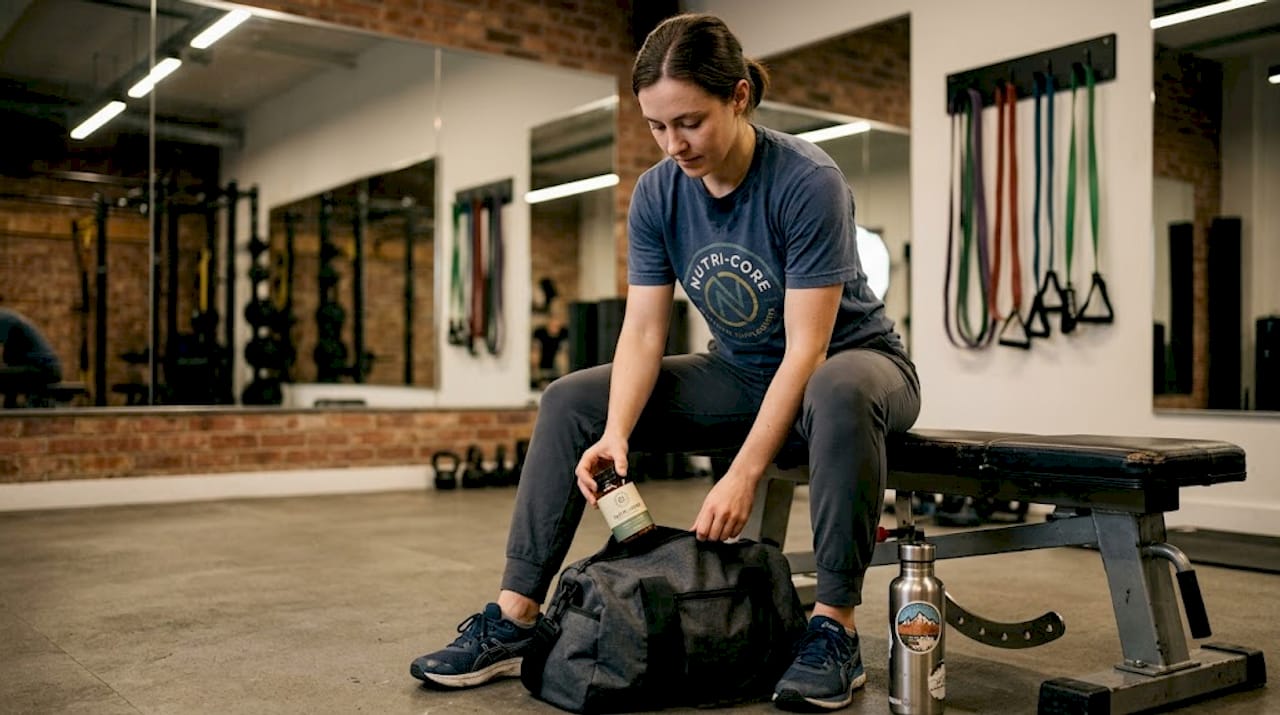
The evidence here is compelling. Multi-ingredient protein supplements combined with exercise increase fat-free mass by 0.45kg and improve muscle hypertrophy (effect size g=0.35) and strength (g=0.50) in women specifically. Iron supplementation improves endurance performance by 2 to 20% in deficient athletes. Creatine at 5g per day boosts strength and power by 5 to 15%. These are not marginal gains. For a competitive woman in her 40s working to maintain muscle mass or recover between sessions, these numbers are transformative.
Here is how the key nutrients deliver their impact:
- Creatine replenishes phosphocreatine stores in muscle, enabling you to sustain high-power output through repeated sprint or lifting intervals. Women have naturally lower creatine stores than men, meaning the relative benefit is actually greater for you.
- Iron is central to oxygen transport via haemoglobin. Low iron is one of the most common and underdiagnosed performance limiters in active women, particularly those with heavy menstrual cycles or plant-heavy diets.
- Omega-3 fatty acids (EPA and DHA) reduce exercise-induced inflammation, support joint integrity, and have been linked to better muscle protein synthesis when combined with resistance training.
- Magnesium plays a role in over 300 enzymatic reactions, including those governing energy production, muscle contraction, and sleep quality. Sweating heavily depletes it faster than most women realise.
- Vitamin D supports muscle function, immune resilience, and bone density, all of which become increasingly critical as you move through your 30s and into perimenopause.
| Nutrient | Primary benefit | Evidence outcome |
|---|---|---|
| Creatine 5g/day | Strength and power | 5 to 15% improvement |
| Iron (correcting deficiency) | Endurance | 2 to 20% improvement |
| Omega-3 (EPA+DHA) | Recovery and inflammation | Reduced muscle soreness |
| Magnesium glycinate | Sleep, muscle recovery | Improved sleep quality markers |
| Vitamin D 2000 IU+ | Bone density, immune function | Reduced injury and illness risk |
Exploring real food supplements that provide these nutrients in their most bioavailable forms is one of the most impactful shifts you can make. You can also look at a breakdown of essential minerals for women athletes to see the full picture.
Pro Tip: If you train hard four or more days a week, consider splitting your supplements so fat-soluble nutrients (D, omega-3) are taken with your largest meal of the day, and creatine is taken consistently at the same time daily, regardless of whether it is a training day.
Personalisation, safety, and the food-first principle
Understanding the ‘what’ and ‘why’ sets the foundation. Now let’s discuss the nuances of supplementing safely and effectively.
Here is where many women go wrong. They see a well-designed product, buy it, and start taking the maximum dose without knowing their baseline. Research on supplements for women 40+ makes clear that benefits are higher in older women, those who are overweight, and those using supplements for longer than 12 weeks timed close to exercise. It also emphasises that iron should be monitored using ferritin levels, with an optimal range of 30 to 100 ng/mL. Going above that range unnecessarily can cause real harm.
This is the difference between supplementing intelligently and self-medicating blindly.
Testing is the non-negotiable first step. At a minimum, ask your GP for:
- Serum ferritin (iron stores, not just haemoglobin)
- 25-hydroxyvitamin D
- B12
- Full blood count
These four markers will tell you more about where your supplementation should focus than any product marketing claim. Understanding supplement testing for safety can help you navigate this process confidently, and supplement purity advice is equally important when selecting which products to trust.
“Supplements bridge genuine gaps in the diet of deficient individuals, but broad preventive claims remain inconsistent in populations that are already nutritionally replete. Food-first and third-party tested products are the baseline standard.”
On the food-first principle: no supplement corrects a chronically poor diet. Before adding anything to your stack, look at whole-food supplement benefits and ensure your base nutrition is solid. Think about it this way. A handful of pumpkin seeds provides magnesium, zinc, and healthy fats simultaneously, in a form your body recognises. A poorly absorbed synthetic magnesium oxide tablet in a budget multivitamin does not come close.
Simple food-first actions to complement your stack:
- Eat oily fish twice weekly for omega-3
- Include dark leafy greens with a source of vitamin C to improve iron absorption
- Prioritise red meat or lentils post-training for iron recovery
- Use full-fat dairy or fortified plant alternatives for calcium and D alongside supplementation
Check vitamin and mineral safety guidelines to understand upper limits before you stack multiple products. Exceeding the tolerable upper intake level for nutrients like vitamin A, zinc, or iron is easier than most people think when you are taking several products simultaneously.
Building your balanced stack: practical tips for women in high-intensity sports
With a safety-oriented mindset, let’s break this down into actionable steps so you can confidently build your supplement routine.
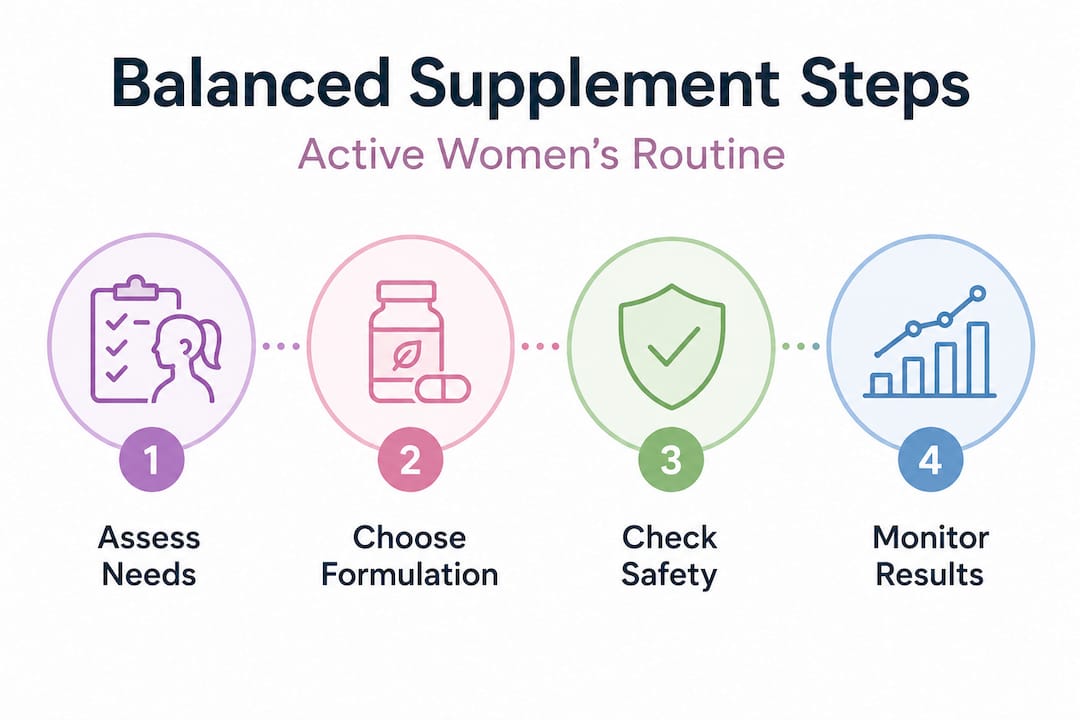
A well-evidenced supplement stack for active women aged 30 to 50 typically includes a quality multivitamin with iron (around 18mg), vitamin D at 2000 to 3000 IU, creatine monohydrate at 5g daily, a high-quality protein supplement, omega-3 (combined EPA+DHA of at least 1g), and magnesium glycinate at 300 to 400mg. Harvard Health recommends testing for deficiencies first, targeting vitamin D above 40 ng/mL and ensuring iron ferritin is in a healthy range before adding iron to your stack.
Here is a step-by-step guide to building yours:
- Get your baseline tested. Book a blood panel before you spend a penny on supplements. This eliminates guesswork and prevents overloading nutrients you already have enough of.
- Prioritise the highest-impact nutrients first. For most active women in this age group, vitamin D, magnesium, and omega-3 are the starting three. Add iron and creatine based on your test results and training type.
- Choose evidence-supported forms. Magnesium glycinate over oxide. Creatine monohydrate over any “advanced” form. Triglyceride-form omega-3 over ethyl ester. These distinctions affect how much your body actually absorbs.
- Adjust for your menstrual or perimenopausal stage. During the luteal phase, magnesium and B6 can ease mood and recovery. In perimenopause, calcium, vitamin D, and creatine take on heightened importance for bone and muscle retention.
- Combine supplementation with resistance training at least two to three times per week. Creatine without resistance training produces only modest benefit. The two together create a meaningfully stronger adaptation signal.
- Review and reassess every 12 weeks. What you need at 34 is different from what you need at 46. Retesting annually and adjusting your stack accordingly keeps it targeted and effective.
What to look for on a product label:
- Third-party certification (Informed Sport, NSF)
- No proprietary blends that hide individual doses
- Named ingredient forms (not just “magnesium” but “magnesium glycinate”)
- No artificial colours, unnecessary fillers, or undisclosed allergens
Explore natural performance boosters and clear sports nutrition steps for a practical entry point. You can also look at holistic fitness strategies that reinforce how supplementation fits within a broader performance framework.
The overlooked reality: why balanced supplements are only powerful when tailored
Here is what we see time and again. A woman discovers that her favourite athlete takes a particular probiotic and collagen stack, buys the same products, and notices almost no difference. Three months later she concludes supplements don’t work. But she never tested her iron. She never adjusted for the fact that she trains six days a week in a cold indoor facility with minimal sun exposure. She never accounted for her perimenopausal shift in protein synthesis requirements.
Supplements are not passive. They interact with your food, your hormones, your training load, and your sleep. A study-backed protocol means nothing if it’s being applied to the wrong person in the wrong context.
The most common mistake we see is treating supplementation as additive rather than corrective. Women add product after product without asking what is actually missing. The result is an expensive routine that is heavy in some nutrients and still deficient in others. Food synergy amplifies supplement efficacy in ways most people ignore. Taking your vitamin D with a meal containing fat is not optional. It doubles absorption. Taking iron with coffee blocks it almost entirely.
The perspective from whole-food supplement research is clear: the women who see the strongest outcomes are those who build their stack on a foundation of nutrient-dense eating and use supplements to correct targeted gaps, not to compensate for a poor diet.
Personalised monitoring, even just quarterly tracking of energy, recovery, and training performance, gives you real feedback on whether your stack is working. That feedback loop is what separates a high-performance approach from expensive guesswork.
Find your balanced foundation with Interval
If this article has shifted how you think about supplementation, the next step is finding products that reflect that standard.
At Interval, every product is built around the needs of women who train hard and expect more from their supplements. The Starter Bundle brings together natural pre-workout and electrolytes formulated with ingredient transparency, purity-tested sourcing, and female-focused performance science. No proprietary blends. No hidden fillers. Just the nutrients that move the needle, at doses that actually matter. If you’re ready to build a stack that fits your body and your training, this is a strong place to start.
Frequently asked questions
How do I know if I need a balanced supplement?
If you train intensely and feel persistently fatigued, ask your GP for a blood test covering ferritin, vitamin D, and B12. Deficiencies in these are common in active women and often go undiagnosed for months.
What is the main difference between a generic multivitamin and a balanced supplement for women in high-intensity sports?
A balanced supplement is formulated at clinically relevant doses targeting the actual nutrient gaps of active women, including meaningful iron, vitamin D, creatine, and omega-3, which generic products rarely include at effective levels.
Can I replace food with supplements for athletic performance?
No. Supplements fill gaps but cannot replicate the full nutrient complexity of a varied whole-food diet. The strongest results come from supplementing on top of solid food habits, not instead of them.
Is it safe to take multiple supplements together?
Generally yes, but always cross-check upper intake levels for each nutrient, avoid doubling up across products, and choose third-party tested supplements to ensure purity and accurate dosing.