


Optimising potassium during exercise for female athletes
TL;DR:
- For female athletes aged 30 to 50, potassium’s role during intense exercise is complex and requires a tailored approach. Proper hydration involves combined sodium and potassium strategies, not standalone supplements, to optimize recovery and performance. Personalized electrolyte management based on training and hormonal status is more effective than generic potassium supplementation or industry-standard advice.
Grab any generic sports nutrition guide and you will find the same message: replenish potassium, avoid cramps, perform better. For female high-intensity athletes aged 30 to 50, this advice is oversimplified to the point of being misleading. Potassium’s role during intense exercise is far more dynamic than a single mineral top-up, involving rapid shifts between your cells and bloodstream, sex-specific vulnerabilities, and a recovery process that depends heavily on what you pair it with. This article unpacks the real evidence so you can build a strategy that actually works for your body.
Table of Contents
- Why potassium matters for female athletes during intense exercise
- What happens to potassium in your body during high-intensity exercise?
- Should women supplement potassium during exercise for optimal results?
- How to hydrate: sodium and potassium combinations for peak recovery
- Pitfalls and special considerations for athletic women aged 30 to 50
- Our perspective: what most guides miss about potassium for high-performance women
- Take your electrolyte strategy to the next level
- Frequently asked questions
Key Takeaways
| Point | Details |
|---|---|
| Potassium shifts during exercise | Intense workouts cause potassium to exit muscle cells, temporarily spiking blood levels and impacting performance risk. |
| Supplement only if needed | Routine potassium supplementation is rarely necessary for women; focus should be on dietary intake and personalised needs. |
| Best rehydration is Na+K | A combined sodium-potassium drink is more effective than water or single mineral drinks for restoring hydration after heavy exercise. |
| Monitor for hypokalaemia | Women 30-50 have increased risk of potassium drop during stress and should watch for symptoms and manage intake carefully. |
Why potassium matters for female athletes during intense exercise
Potassium (K+) is the dominant mineral inside your muscle cells, and it drives two non-negotiable functions: muscle contraction and nerve signal transmission. Every sprint, every heavy lift, every maximal effort depends on potassium moving rapidly in and out of your muscle cells to generate electrical impulses. Without tight regulation of this process, your muscles simply stop firing efficiently.
What most guides skip over is just how dramatic those potassium shifts become during hard training. Plasma potassium rises sharply during high-intensity exercise as potassium floods from inside your muscle cells into the surrounding fluid and bloodstream. At maximal efforts this can exceed 8 mmol/L, a level that, if poorly regulated, can trigger arrhythmias. Your body manages this tightly during normal training loads, but repeated maximal bouts reduce that margin for error.
For women aged 30 to 50, that margin is already narrower. Women are more susceptible to hypokalaemia (low blood potassium) during exercise stressors than men, driven by sex-specific differences in how potassium is regulated under physical stress. Hormonal fluctuations across the menstrual cycle and perimenopause interact with electrolyte handling, making this demographic particularly worth paying attention to.
Key signs of potassium imbalance to watch for include:
- Muscle cramps that persist beyond normal post-workout soreness
- Irregular heartbeat or palpitations during or after sessions
- Unusual fatigue that does not match your training load
- Muscle weakness disproportionate to effort
- Tingling or numbness in the limbs after intense bouts
Understanding these warning signs is the foundation of smarter electrolyte replenishment for training women. Ignoring them and simply reaching for a potassium supplement is not the answer, as the next sections will make clear.
“The relationship between potassium and performance in women is not simply about having enough. It is about how quickly and precisely your body can redistribute it under extreme physiological stress.”
What happens to potassium in your body during high-intensity exercise?
Understanding the mechanics here puts you ahead of most athletes. When you push into high-intensity zones, your muscle cells fire repeatedly at a fast rate. Each firing requires potassium to exit the cell and sodium to enter, generating the electrical charge needed for contraction. The harder and faster you train, the more potassium floods into your bloodstream.
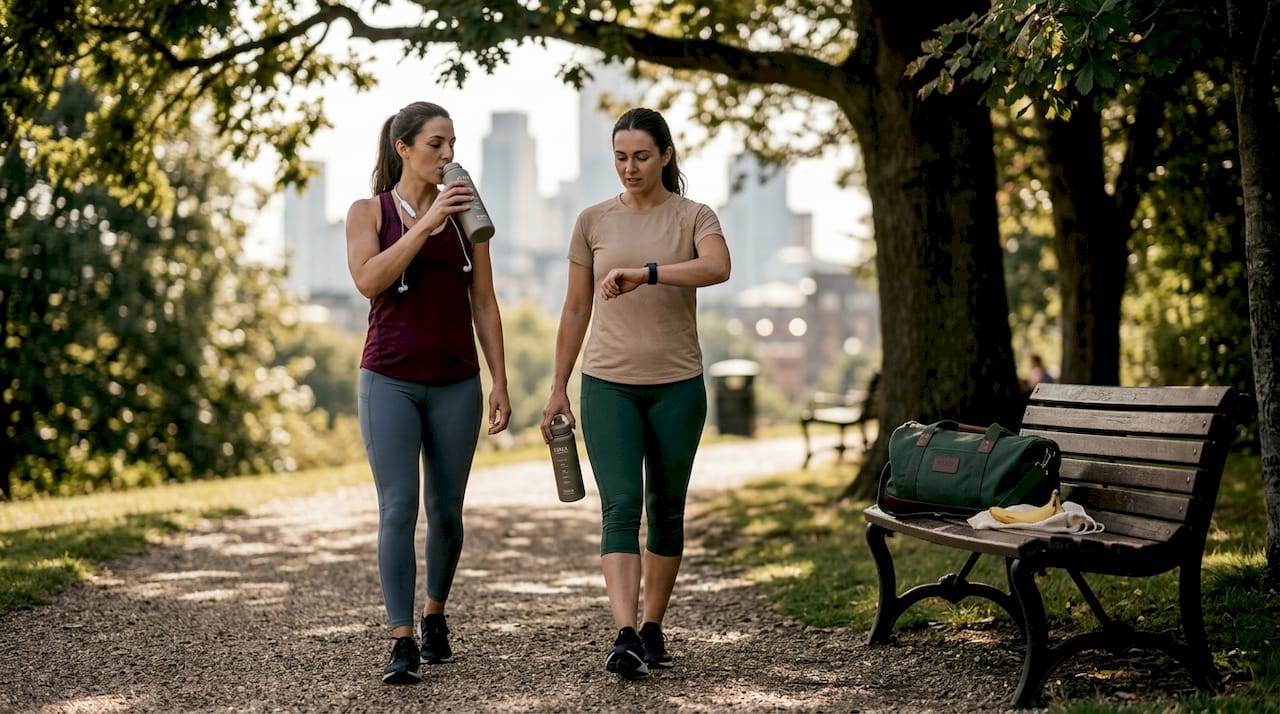
Muscle potassium decreases 5 to 10% during exhaustive exercise, with intracellular levels dropping by around 20% at peak exertion, before the Na-K ATPase pump (your cellular potassium recharger) works to restore balance during and after your session. This pump is critical. Without it, your muscles cannot sustain repeated contractions.
Here is how the potassium cycle looks during and after a hard session:
| Phase | What happens to K+ | Risk level |
|---|---|---|
| Warm-up (low intensity) | Slight rise in plasma K+ | Low |
| High-intensity working sets | Plasma K+ spikes, muscle K+ drops sharply | Moderate to high |
| Maximal effort (sprints, lifts) | Plasma K+ can exceed 8 mmol/L | High if dysregulated |
| Immediate post-exercise | Na-K pump activates, restores cellular K+ | Low to moderate |
| Full recovery (30 to 60 min) | K+ redistributes to near-baseline | Low if nutrition supports it |
Women recover potassium at a different rate compared to men, meaning that the window after training when your electrolyte strategy matters most is longer and more variable. If you train twice a day or back sessions on consecutive days, incomplete restoration from the first session stacks risk into the second.
Pro Tip: If you are doing double sessions or high-volume training blocks, prioritise your post-session electrolyte window in the first 30 minutes. This is when the Na-K pump is most active and responsive to nutritional support, including buffered electrolytes that allow for faster cellular uptake.
Should women supplement potassium during exercise for optimal results?
This is where most sports nutrition advice falls apart. The logical leap from “potassium matters” to “therefore supplement with potassium” is not supported by the evidence for women in your category.
Routine potassium supplementation during exercise is not backed by evidence for performance gains in female high-intensity athletes aged 30 to 50. The recommendation is instead to meet elevated needs through diet, targeting 2,600 to 6,000mg per day depending on your training intensity and sweat rate, while monitoring for the higher hypokalaemia risk that women carry.
A trial looking specifically at acute supplementation found that potassium phosphate post-exercise showed no benefit on subsequent high-intensity performance, substrate oxidation (how your body burns fuel), or recovery metrics. In other words, a standalone potassium supplement after training does not improve what happens in your next session.
Here is a practical breakdown of your options:
| Approach | Pros | Cons |
|---|---|---|
| Dietary potassium (bananas, sweet potato, avocado) | Bioavailable, balanced, comes with cofactors | Harder to control precise intake |
| Potassium-only supplements | Convenient, precise dose | No evidence of performance benefit, possible risk at high doses |
| Combined Na+K electrolyte drinks | Best evidence for rehydration and recovery | Needs quality formulation, not all drinks are equal |
| Standard sports drinks (low electrolytes) | Widely available | Often inadequate potassium and sodium levels |
The strongest electrolyte sources for female athletes remain whole foods combined with targeted electrolyte drinks, not standalone potassium capsules.
A personalised approach still has its place. If you have a documented history of exercise-associated cramps or your doctor has flagged arrhythmia risk, specific monitoring and supplementation under guidance may be appropriate. But for the majority of well-nourished athletes training at high intensity, adding a potassium pill is not the performance lever you are looking for.
Key dietary sources worth prioritising:
- Sweet potato (one medium: roughly 950mg K+)
- White beans (half a cup: roughly 600mg K+)
- Salmon (100g: roughly 490mg K+)
- Avocado (one fruit: roughly 700mg K+)
- Spinach (one cup cooked: roughly 840mg K+)
How to hydrate: sodium and potassium combinations for peak recovery
If potassium alone is not the answer, what is? The most compelling recent evidence points clearly to the combination of sodium and potassium as the key to genuine fluid balance restoration after hard sessions.
Rehydration with combined high Na+K drinks at a ratio of 480mg/L sodium and 1,120mg/L potassium improves net fluid balance and reduces urine output after dehydration more effectively than high sodium alone, high potassium alone, or plain water. This is a significant finding because it explains why drinking water after intense exercise often leaves you still feeling off. Water dilutes remaining electrolytes, triggering urination before full rehydration occurs.
“Plain water after a hard session can actually speed up fluid loss by diluting plasma electrolytes and stimulating urine output before you have replaced what was lost.”
For practical application after high-intensity sessions, consider the following approach:
- In the first 30 minutes post-session: consume 500 to 750ml of a combined Na+K electrolyte drink rather than plain water
- Aim for a 1.5:1 ratio: drink 150% of estimated fluid losses (weigh yourself before and after if possible)
- Avoid large volumes of plain water immediately post-session if you have been training at high intensity for over 60 minutes
- Include a sodium source in your post-workout meal to support continued fluid retention
- Track colour: pale straw urine within 90 minutes of finishing suggests adequate rehydration
Your post-workout electrolytes strategy is arguably more impactful than anything you do during the session itself, particularly for back-to-back training days. And for those doing structured high-intensity programmes, having a clear electrolyte workflow removes the guesswork entirely.
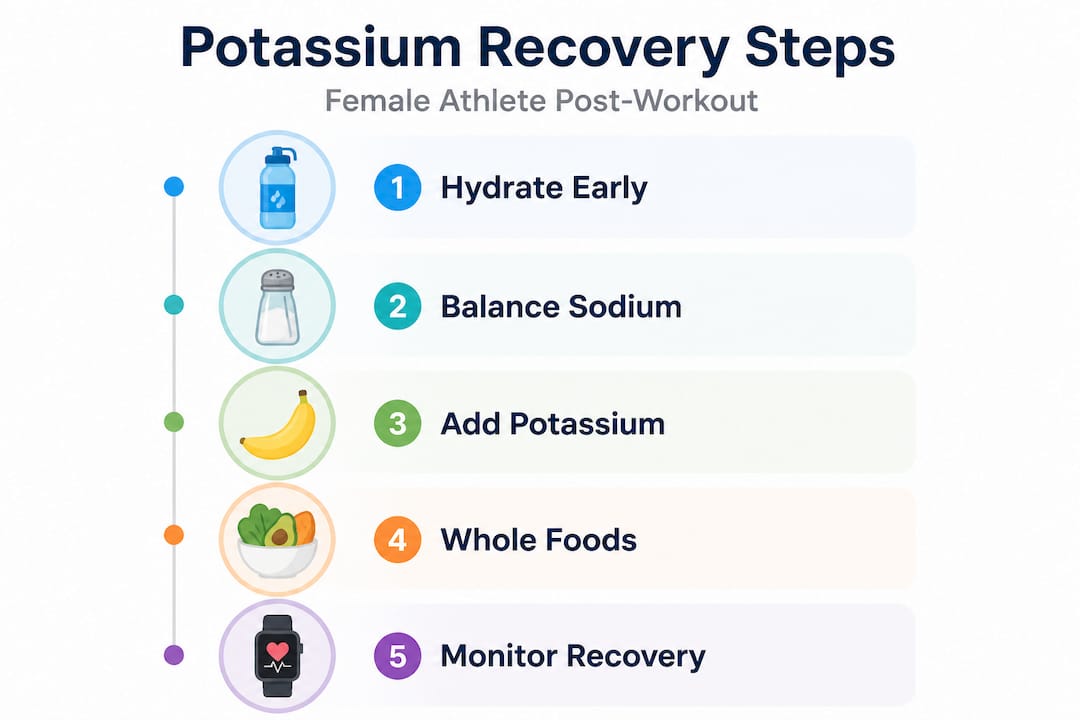
Pro Tip: Do not wait until you feel thirsty to start your post-session rehydration. Thirst is a late signal. By the time it kicks in after hard training, you are already behind on fluid balance. Start your combined Na+K drink within 10 minutes of finishing.
Pitfalls and special considerations for athletic women aged 30 to 50
Even well-informed athletes make avoidable mistakes around potassium. Here are the ones we see most often.
-
Assuming sweat potassium reflects systemic losses. Sweat contains relatively little potassium compared to sodium. Do not use a sweaty kit as evidence that you need potassium supplements. Sweat K+ remains unchanged even during heat acclimation training, and no intramuscular or whole-body potassium deficits develop from this type of training despite varying sodium intake.
-
Over-supplementing during heat training. Training in hot conditions creates a common fear of potassium depletion, but the evidence does not support this. Heat acclimation does not deplete potassium in the way sodium is lost. Piling in extra potassium supplements in summer training camps is misguided and could actually disrupt the fine electrolyte balance you are trying to protect.
-
Ignoring sex-specific hormonal effects. Oestrogen and progesterone fluctuations influence aldosterone activity, the hormone that regulates how your kidneys handle potassium and sodium. During the luteal phase or perimenopause, these effects are amplified. This is a reason to monitor more closely, not to supplement blindly.
-
Using only commercial sports drinks. Many standard sports drinks contain far too little potassium and sodium to meet the levels shown to be effective in the research. Check labels carefully and prioritise products designed with evidence-based electrolyte ratios in mind.
-
Confusing cramps with potassium deficiency. Exercise-associated muscle cramps are not reliably caused by potassium deficiency alone. Fatigue, neuromuscular load, and dehydration are often the primary drivers. Addressing optimising electrolyte intake as a whole system is more effective than targeting potassium in isolation.
“Sweat potassium does not tell you much about your systemic potassium status. Stop using it as your diagnostic tool.”
Our perspective: what most guides miss about potassium for high-performance women
Most sports nutrition content treats potassium as a one-size lever. Top it up, prevent cramps, job done. That framing ignores something genuinely important: your training history changes how your body handles potassium at a cellular level.
Trained athletes show a blunted plasma K+ rise during exercise because consistent high-intensity training improves Na-K pump efficiency. Your cells become better at managing potassium flux, which means a conditioned 40-year-old athlete competing in Hyrox or CrossFit is not in the same physiological position as a recreational exerciser. Generic guides written for the general population do not account for this adaptation, and that is where the advice breaks down.
We have seen too many experienced female athletes adding potassium supplements to their stack based on advice designed for sedentary or recreationally active people. The result is unnecessary supplementation at best and disrupted electrolyte balance at worst.
The counterintuitive reality is this: the more trained you are, the less likely you are to need isolated potassium supplementation, because your Na-K pump is sharper than a beginner’s. What you do need is a well-formulated, combined sodium and potassium rehydration strategy that accounts for your actual fluid losses and training volume.
Personalisation is not just a buzzword here. It is the actual answer. Blood monitoring at key points in your training cycle, adjusting electrolyte intake relative to session intensity, and using evidence-grade products rather than trend-driven supplements will consistently outperform any generic potassium protocol. Start with fast-acting electrolytes that are built on this kind of evidence, and build your strategy from there.
Blanket supplementation is not a performance strategy. It is guesswork dressed up as nutrition.
Take your electrolyte strategy to the next level
The evidence is clear: for female high-intensity athletes, recovery and performance depend on getting your combined electrolyte protocol right, not simply adding more potassium.
At Interval, we have built our electrolyte starter bundle specifically for women training at high intensity who want science-backed support without the guesswork. Our formulations use natural ingredients and evidence-based ratios of sodium and potassium, matched to the demands of training programmes like Hyrox, CrossFit, and track athletics. If you are ready to stop piecing together advice from generic guides and start working with a protocol built for athletes like you, explore our full range of hydration solutions and find the right fit for your training block.
Frequently asked questions
What are the main signs of potassium deficiency during intense workouts?
Common signs include muscle cramps, irregular heartbeat, and unusual fatigue. Women aged 30 to 50 face higher risk of hypokalaemia during exercise due to sex-specific differences in electrolyte regulation.
Should I supplement with potassium to prevent cramps if I sweat a lot?
The evidence favours meeting needs through whole foods and combined Na+K electrolyte drinks rather than standalone high-dose potassium supplements. Routine K+ supplementation during training shows no performance benefit for female athletes in this group.
Do women need more potassium than men during intense exercise?
Women are more prone to low potassium under exercise stress and warrant closer monitoring, but blanket supplementation is not recommended. Individual hormonal status and training volume matter more than a fixed dosing rule.
What’s the best way to rehydrate after hard sessions?
Drinks combining sodium and potassium are significantly more effective for fluid balance than water or single-mineral solutions. Combined Na+K drinks at 480mg/L sodium and 1,120mg/L potassium produce the best rehydration outcomes.
Does training in the heat increase potassium loss?
No. Research shows sweat potassium does not increase with heat acclimation, and whole-body potassium deficits from heat training are not supported by the evidence.
Recommended
- Optimise muscle performance: electrolyte needs for women – Interval
- Why electrolyte timing boosts female athletic performance – Interval
- Electrolyte synergy: optimise performance for female athletes – Interval
- Top electrolyte replenishment tips for female athletes – Interval
- Effective cold plunge routine for athletes to boost recovery – Coldture Wellness