


Why personalised supplementation unlocks athletic gains
TL;DR:
- Generic supplement plans often overlook hormonal fluctuations and individual nutritional needs of female Hyrox athletes.
- Personalized approaches use genetic testing, blood biomarkers, and wearables for tailored supplementation, improving performance.
- Consistent action and periodic review are essential for actual progress, beyond simply obtaining genetic or blood data.
Generic supplement plans were never built with you in mind. For female Hyrox athletes aged 30 to 50, one-size-fits-all protocols overlook hormonal fluctuations, menstrual cycle phases, and the specific metabolic demands of a sport that combines running with functional fitness at high intensity. The emerging science is clear: personalised supplementation outperforms generic approaches by accounting for individual variations in genetics, biomarkers, and physiology. This article breaks down where generic plans fail, what the science actually says, and how you can start building a smarter, more effective strategy without falling for the hype.
Table of Contents
- Why generic supplement plans fall short for female Hyrox athletes
- The science behind personalised supplementation: Tools and methods
- Real-world impact: Evidence for performance and recovery
- Risks, nuances, and how to get started safely
- Why the buzz about personalisation misses the hardest truth
- Supercharge your routine with trusted personalised support
- Frequently asked questions
Key Takeaways
| Point | Details |
|---|---|
| Women need tailored support | Personalised supplementation better addresses iron, hormone, and recovery gaps in female Hyrox athletes. |
| Evidence-based strategies win | Individual data drive more powerful performance boosts and faster recovery than guesswork or generic doses. |
| Start safe and monitor | Combine scientific testing with expert advice and ongoing adjustments for best long-term results. |
| Don’t fall for marketing hype | Genuine personalisation means action and review, not just buying the latest test or supplement trend. |
Why generic supplement plans fall short for female Hyrox athletes
Most supplement advice is built on research conducted predominantly on young men. That is not an exaggeration. Only around 10% of sports science studies specifically address female athlete needs, which means the protocols you read about on packaging or generic training blogs are largely extrapolated from male data. For women aged 30 to 50, this gap is significant.
Hormonal shifts across the menstrual cycle, perimenopause, and menopause directly affect how your body absorbs, utilises, and depletes nutrients. Oestrogen influences iron metabolism, vitamin D absorption, and even caffeine sensitivity. A plan that ignores these variables is not just incomplete; it is potentially counterproductive.
Iron deficiency is one of the clearest examples. It affects up to 60% of female athletes and directly reduces oxygen-carrying capacity, which hits endurance performance hard. Hyrox is a sport built on sustained output across eight functional stations. If your iron levels are suboptimal, no amount of pre-workout will compensate. The whole-food supplement benefits approach helps here, because bioavailability matters as much as dosage.
Here is a quick comparison of what generic versus personalised approaches actually look like in practice:
| Factor | Generic plan | Personalised plan |
|---|---|---|
| Iron levels | Standard dose for all | Adjusted to blood test results |
| Caffeine timing | Fixed pre-workout window | Aligned with cycle phase and tolerance |
| Vitamin D | Blanket recommendation | Dosed to individual deficiency |
| Electrolytes | One formula | Tailored to sweat rate and training load |
The key gaps that generic plans consistently miss include:
- Genetic variation in nutrient metabolism, meaning two athletes can respond entirely differently to the same supplement
- Hormonal context, particularly how cycle phase affects energy, recovery, and nutrient demand
- Age-related metabolic shifts that alter absorption and utilisation of key micronutrients
- Training periodisation, where nutritional needs change significantly between base training and race prep
“Personalised supplementation directly addresses gender-specific needs that generic protocols routinely overlook, leading to measurable improvements in both performance and recovery.”
Understanding enhancing real food supplement results is a useful starting point, and pairing that with sustainable supplement insights helps you build a foundation that actually holds up over a full training season.
The science behind personalised supplementation: Tools and methods
Personalisation sounds sophisticated, but the tools are more accessible than most athletes realise. The science has moved quickly, and you do not need to be a biochemist to use it effectively.

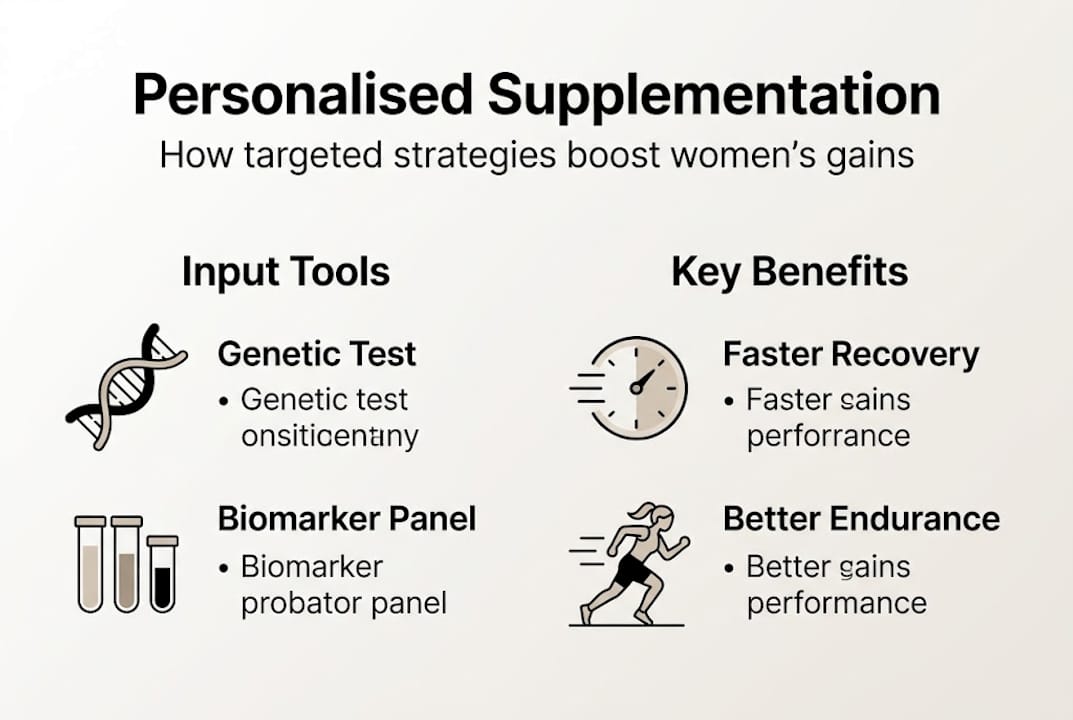
Genetic testing (nutrigenomics) looks at variants in genes like VDR (vitamin D receptor) and MTHFR (which affects folate metabolism). These variants influence how efficiently your body processes specific nutrients. Two athletes eating identical diets can have dramatically different micronutrient statuses because of these differences. Key methodologies now include genetic testing, biomarker analysis, omics technologies, wearables, and AI integration, all working together to build a clearer picture of individual need.
Biomarker testing through blood panels gives you real data on ferritin, vitamin D, B12, magnesium, and inflammatory markers. This removes guesswork entirely. You stop supplementing what you think you need and start addressing what your body is actually showing.
Wearables add another layer by tracking sleep quality, heart rate variability, and training load in real time. When combined with nutritional data, these metrics can flag when your recovery is compromised and whether your current supplement protocol is supporting or undermining adaptation.
AI-driven platforms are beginning to integrate all these data streams, offering recommendations that update dynamically as your training and biomarkers change. This is still an emerging area, but the direction is clear.
Here is a summary of the main tools and what they reveal:
| Tool | What it measures | Practical use |
|---|---|---|
| Genetic test | Nutrient metabolism variants | Guides baseline supplement choices |
| Blood panel | Ferritin, vitamin D, B12, magnesium | Identifies active deficiencies |
| Wearable | HRV, sleep, training load | Tracks recovery and adaptation |
| AI platform | Integrated data streams | Dynamic, updated recommendations |
For natural intake strategies that align with these tools, it helps to understand which performance boosters for women have the strongest evidence base before you invest in testing.
Pro Tip: Never act on a single data point in isolation. A genetic variant for lower vitamin D absorption means nothing without a blood test confirming your actual levels. Always interpret results in context, ideally with a qualified sports nutritionist.
If mental performance is part of your Hyrox prep, naturally enhancing focus is worth reading alongside your biomarker results.
Real-world impact: Evidence for performance and recovery
The research is moving beyond theory. Personalised nutrition has now shown up to 23.5% performance gains in beta intervention trials, alongside greater improvements in mood, sleep, weight management, and cholesterol compared to generic protocols. For Hyrox athletes, where the difference between a personal best and a plateau often comes down to recovery quality, these numbers matter.
Here are four concrete examples of how personalised tweaks drive real outcomes:
-
Iron correction in endurance athletes. Correcting iron deficiency in female athletes has been shown to deliver endurance gains of 2 to 20%, depending on the severity of the initial deficiency. For a Hyrox athlete struggling through the later running segments, this single intervention can be transformative.
-
Caffeine sensitivity and timing. Supplement efficacy varies significantly by individual, particularly with caffeine and beta-alanine. Some athletes are fast metabolisers who benefit from caffeine close to competition; others are slow metabolisers who experience anxiety and disrupted sleep from the same dose. Knowing your profile changes how you use pre-workout entirely.
-
Vitamin D and muscle function. Many women aged 30 to 50 in the UK are deficient in vitamin D, particularly through winter months. Correcting this deficiency supports muscle contraction, immune function, and mood, all of which feed directly into training consistency.
-
Electrolyte personalisation. Sweat rate and sodium concentration vary considerably between individuals. A high-sodium sweater using a standard electrolyte formula may still be under-replacing during a Hyrox race, leading to cramping and cognitive decline in the final stations.
The enhance with real foods approach works best when you know which nutrients your diet is already covering and which gaps supplements need to fill. The whole-food advantage is particularly relevant here, because bioavailable forms of nutrients close deficiencies faster than synthetic alternatives in many cases.
Risks, nuances, and how to get started safely
Personalisation is powerful, but it is not without risk. Before implementing any new protocol, understanding the limits of the available tools is essential.
The most important caveat is that gene-environment interactions are complex, and genomic data alone cannot predict your response to a supplement with certainty. Small sample sizes in many nutrigenomics studies, combined with ongoing female underrepresentation in research, mean that some recommendations are still based on incomplete evidence. A genetic test is a starting point, not a prescription.
Common pitfalls to avoid:
- Chasing fads over evidence-backed interventions. Collagen peptides and adaptogens have their place, but iron and vitamin D deficiencies matter far more for most athletes.
- Ignoring the menstrual cycle. Nutritional needs shift across cycle phases, and a static supplement plan will not account for this. Nutrition’s role in recovery is well established, and cycle-aware strategies are increasingly supported by research.
- Skipping professional input. Misinterpreting a blood test or overdosing on fat-soluble vitamins like A, D, E, or K can cause genuine harm.
- Not reviewing periodically. Your needs change with training load, season, and life stage. A plan built in January may be outdated by June.
Pro Tip: Start with a basic blood panel covering ferritin, vitamin D, B12, and magnesium before spending anything on advanced testing. These four markers address the most common deficiencies in female athletes and give you an immediate, actionable baseline.
Understanding avoiding high-intensity risks in your nutrition approach is a smart first step, and learning about timing supplementation correctly will help you get more from whatever protocol you build.
“Integrate personalised supplementation with your periodisation plan and consult qualified experts to avoid the risks that come from acting on incomplete or misinterpreted data.”
Why the buzz about personalisation misses the hardest truth
Here is what most personalisation guides will not tell you: the test is the easy part. Ordering a DNA kit or booking a blood panel feels productive. It is the follow-through that separates athletes who actually improve from those who accumulate data and change nothing.
We see this pattern repeatedly. Athletes invest in genetic testing, receive a detailed report, and then continue with the same supplement stack they have always used because the report felt overwhelming or contradicted what they wanted to hear. Real-world gains come from consistent action, honest tracking, and the willingness to adjust when something is not working.
The menstrual cycle is the most underused performance variable in female athlete supplementation. Aligning iron intake with the follicular phase, adjusting electrolytes during the luteal phase, and modifying caffeine use around ovulation can make a measurable difference. No DNA test will tell you this. It requires attention, pattern recognition, and time. The intake tips for women that account for cycle phase are still rare, but they are the most relevant kind.
Personalisation is not a product. It is a practice.
Supercharge your routine with trusted personalised support
If this article has shifted how you think about your supplement strategy, the next step is putting that thinking into action with products that are actually built for high-intensity female athletes.
Interval’s Starter Bundle gives you a research-driven foundation using natural ingredients, designed to support the specific demands of Hyrox training without unnecessary fillers or synthetic additives. It is a practical starting point while you build out your personalised approach. Explore the full range of guides and resources at Interval to find support that fits where you are in your training right now.
Frequently asked questions
How do I know which supplements I need for Hyrox?
Start with an assessment of your training intensity, nutrition, and potential deficiencies, ideally confirmed via blood and biomarker tests and expert consultation. This removes guesswork and targets the areas where you will see the greatest return.
Is personalisation really necessary if I eat healthily?
Even with a strong diet, genetic and hormonal individuality means your specific needs may not be fully met through food alone, particularly during high training loads or hormonal transitions.
Are there risks to personalised supplementation?
Yes. Misinterpreted tests or excessive dosages of fat-soluble vitamins can cause harm. The complexity of gene-environment interactions means professional guidance is not optional; it is essential for safe implementation.
What is the main difference between generic and personalised plans?
Generic plans apply the same recommendations to everyone, while personalised plans use your individual biomarker and genetic data to target your specific requirements, which consistently produces better outcomes.