


Why micronutrients matter for female athletic performance
TL;DR:
- Micronutrient deficits can impair athletic performance even with adequate calorie and protein intake, especially in female athletes. Addressing deficiencies through personalized assessment and food-first strategies enhances endurance, recovery, and overall results. Targeted supplementation based on specific needs yields better outcomes than generic multivitamins and supports long-term health and performance.
You train hard, eat enough protein, and track your calories carefully — yet something still feels off. Your recovery drags, your energy dips mid-session, and performance plateaus for no obvious reason. The answer is rarely more calories or another protein shake. Research confirms that micronutrient deficits can hinder performance even when energy intake looks perfectly matched. For female athletes in their 30s and 40s doing high-intensity sport, the micronutrient picture is where many performance gains are quietly lost.
Table of Contents
- The hidden role of micronutrients in fitness
- Micronutrient deficiencies: The performance roadblock
- Energy availability, diet, and the female athlete triad
- Assessment and supplementation: When and how to act
- A fresh perspective on micronutrients: What really works in practice
- A smarter path to micronutrient support
- Frequently asked questions
Key Takeaways
| Point | Details |
|---|---|
| Hidden deficiency risk | Even active women eating seemingly well are still at risk from micronutrient shortfalls. |
| Performance impact | Correcting iron, calcium, or vitamin D deficiency can make a tangible difference to endurance and recovery. |
| Assess before supplementing | Supplementation is most effective when driven by assessment and individual need, not guesswork. |
| Energy–nutrient connection | Low energy availability often signals micronutrient risk and calls for a holistic approach to nutrition. |
The hidden role of micronutrients in fitness
Macronutrients (protein, carbohydrates, and fats) get almost all the attention in sports nutrition conversations. But micronutrients — the vitamins and minerals your body needs in smaller amounts — are the engine behind every metabolic process that makes athletic performance possible. Without them, macronutrients simply cannot do their job properly.
Micronutrients power the pathways that release energy from food, carry oxygen to working muscles, support hormonal balance, and repair tissue after hard training. Iron enables haemoglobin to transport oxygen through the blood. Calcium and vitamin D work together to maintain strong bones under repeated loading. Zinc supports immune function and tissue repair. Sodium keeps fluid balance in check during heavy sweating. These are not background players — they are central to every run, lift, or high-intensity interval you perform.
The challenge is that training intensity raises your micronutrient needs substantially. Sweat losses during a tough session deplete electrolytes. Higher metabolic turnover burns through B vitamins. Frequent training with restricted eating (common among women managing weight or fuelling around a busy schedule) can create gaps that quietly accumulate. The micronutrient impact on Hyrox performance is a clear example of how these gaps show up in demanding sport formats.
As inadequate micronutrient intake can impair both performance and health, particularly when training is intense or diets are unbalanced, this is not a niche concern. It affects competitive athletes and dedicated recreational exercisers alike.
Essential micronutrients for female athletes
| Micronutrient | Key function | Main risk in athletes |
|---|---|---|
| Iron | Oxygen transport via haemoglobin | Lost in sweat and menstruation |
| Calcium | Bone strength, muscle contraction | Restricted diets, low dairy intake |
| Vitamin D | Bone health, immune regulation | Low sunlight exposure, UK climate |
| Sodium | Fluid balance, nerve conduction | Heavy sweat losses |
| Zinc | Recovery, immune function, hormone support | High training load, plant-based diets |
Core mechanisms affected by micronutrient status during training include:
- Energy production: B vitamins activate the pathways that convert food into ATP
- Muscle contraction: Calcium, magnesium, and sodium all regulate muscle function
- Oxygen delivery: Iron directly determines how much oxygen reaches working tissue
- Bone remodelling: Calcium and vitamin D maintain density under repeated stress
- Immune resilience: Zinc and vitamin C support recovery between hard sessions
Female athletes face a uniquely high risk of micronutrient deficiency due to the combination of elevated physiological demand, menstrual losses, and the cultural pressure to remain lean. Recognising this is the first step towards addressing it.
For a broader view of how training nutrition connects to results, the guide on enhancing high-intensity results is worth exploring.
Micronutrient deficiencies: The performance roadblock
Now that we see why micronutrients matter biologically, it’s crucial to grasp how real-life deficiencies show up and why they’re so common in athletic women.
Iron is the most studied and most concerning deficiency among active females. Critically, iron deficiency can impair your endurance and training quality before anaemia develops. This is called non-anaemic iron deficiency, and it is surprisingly widespread. Iron deficiency is common among physically active women and directly impairs endurance performance, yet it often goes undetected because standard blood tests miss it unless ferritin is specifically checked.
The performance stakes are significant. Research shows that iron repletion in deficient athletes can increase performance by 2 to 20%, depending on how low baseline stores were. That is a remarkable range, and it highlights how much you might be leaving on the table without even realising it.
How deficiencies affect fitness outcomes
| Deficiency | Performance impact | Commonly missed sign |
|---|---|---|
| Iron | Reduced VO₂ max, early fatigue, poor endurance | Feeling breathless at familiar intensities |
| Calcium | Stress fracture risk, impaired muscle function | Leg cramps, slow bone healing |
| Vitamin D | Reduced strength, poor immunity, low mood | Frequent illness in winter months |

Studies suggest that up to 35% of female athletes experience some degree of iron deficiency, while clinical anaemia affects roughly 3 to 5%. That gap between those two numbers represents thousands of women training with reduced capacity and no clear diagnosis.
Signs that female athletes commonly overlook include:
- Persistent fatigue that does not resolve with rest days
- Heart rate that feels higher than expected during familiar workouts
- Difficulty hitting previous pace or power targets
- Mood changes, irritability, or poor concentration in the days after hard sessions
- Recurring minor illness or infections that disrupt training blocks
- Brittle nails, hair thinning, or unusual paleness
Exploring minerals for female athletes in more depth reveals how interconnected these deficiencies often are. A drop in one mineral tends to create a cascade across others, which is why addressing micronutrient gaps systematically matters. The guide on essential minerals for performance offers a practical starting point.
Energy availability, diet, and the female athlete triad
With the stakes clear, understanding the link between training, diet, and the special risks faced by female athletes is the next critical step.
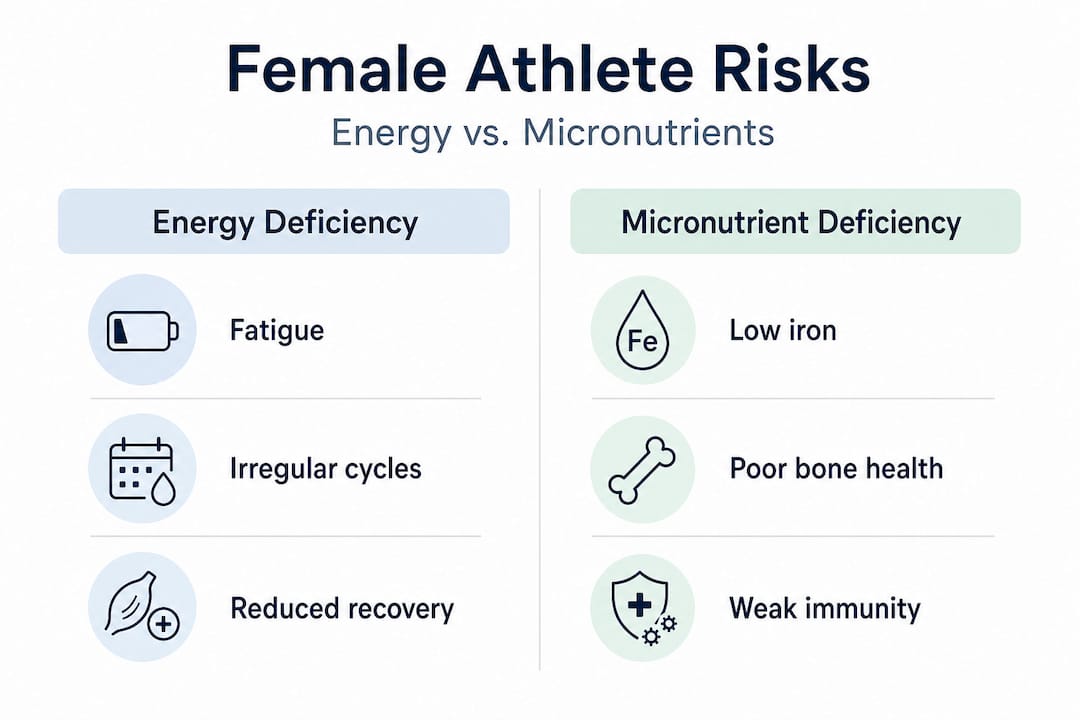
The female athlete triad is a syndrome made up of three interconnected issues: low energy availability, menstrual dysfunction, and low bone mineral density. It does not only affect elite athletes or underweight women. It can develop gradually in any active woman who consistently burns more energy than she consumes, even by a modest margin. When energy availability drops, the body prioritises survival over performance, pulling resources away from hormonal function and bone maintenance.
Low energy availability, menstrual dysfunction, and low bone density frequently coexist in athletic women, raising micronutrient needs for calcium, vitamin D, and often iron simultaneously. This is not a condition that only affects women who are trying to lose weight. It can appear at any healthy weight when training volume is high and dietary intake does not keep pace.
An athlete can have a seemingly normal body composition and still have critically low energy availability. Body weight alone is not a reliable indicator of adequate fuelling, and this is where the triad catches many women off guard.
Typical eating and training patterns that increase the risk of triad-related micronutrient problems include:
- Training twice daily without adjusting food intake accordingly
- Avoiding food groups such as dairy, red meat, or grains for aesthetic or lifestyle reasons
- Restricting carbohydrate intake during heavy training phases
- Skipping meals around training due to time pressure or appetite suppression
- Following a calorie deficit during a period of high competition load
- Relying on the same small rotation of foods without much variety
Restrictive diets combined with high output can foster deficiency even when weight appears normal, which is exactly why so many active women are surprised when their blood results reveal low ferritin or vitamin D.
Pro Tip: If your period becomes irregular or disappears during a training block, treat it as an early warning signal, not a normal training side effect. It indicates that energy availability has dropped to a point where micronutrient strategies alone are not enough. Increasing total food intake, particularly around sessions, is the most important first step.
For practical guidance on natural sports nutrition steps to support energy balance, that resource covers the foundations well.
Assessment and supplementation: When and how to act
Understanding when and how to intervene safely and effectively is the last step from insight to practical action.
The first move is not to buy a supplement stack. It is to understand your personal risk. Symptoms, dietary habits, and performance patterns together give you a useful picture before you invest in testing or products. Fatigue, performance regression, and frequent illness are your body flagging a gap. A consistently low intake of iron-rich foods, dairy, or oily fish over months creates a predictable risk profile.
From there, a structured approach to assessment makes the most sense:
- Review your diet honestly across at least seven days, noting key food groups and any consistent gaps
- Track performance markers such as resting heart rate, session quality, and recovery time over several weeks
- Book a blood panel that specifically includes serum ferritin, vitamin D (25-OH), and a full blood count, not just standard markers
- Discuss your training load with a sports dietitian or physician rather than a general GP, as context matters enormously
- Retest after intervention at eight to twelve weeks to confirm whether supplementation or dietary changes have had the desired effect
Nutrition plans for athletes should be individualised, using assessments to decide if targeted supplementation is actually justified. This expert consensus matters because many women spend money on supplements that do not address their actual deficiency, while the real issue remains unresolved.
Food-first strategies remain the most effective approach for mild insufficiency. Combining iron-rich foods such as red meat, lentils, and spinach with vitamin C sources at the same meal significantly improves absorption. Eating oily fish twice a week supports vitamin D. Dairy or fortified alternatives cover calcium needs for most women. These are straightforward, practical changes that cost nothing and often resolve subclinical gaps.
When supplementation is warranted, targeted single-nutrient products outperform generic multivitamins in research settings. Iron supplements work best taken on alternate days on an empty stomach. Vitamin D is fat-soluble and absorbs better with a meal containing fat.
Pro Tip: When you visit a healthcare provider, ask specifically for ferritin, not just haemoglobin. Ask for 25-OH vitamin D, not just “vitamin D.” These distinctions are critical. A normal haemoglobin result with low ferritin still indicates depleted iron stores that will affect your performance.
Pairing these strategies with information on personalised supplementation guidance and functional workout nutrition gives you a more complete picture of how to support your training daily.
A fresh perspective on micronutrients: What really works in practice
Here is the uncomfortable truth that most sports nutrition conversations avoid: the multivitamin many active women take every morning as an “insurance policy” is likely doing very little for their performance. This is not because micronutrients do not matter. It is because the gaps that are actually affecting your results are rarely the ones a generic tablet addresses at the doses it contains.
The biggest performance gains come from correcting proven micronutrient deficits, not from indiscriminate supplementation. That sentence changes the entire framing. It means your first investment should be information, not products.
What is still widely missed in practice is how much your micronutrient requirements shift depending on your current training load, where you are in your menstrual cycle, and what you have been eating for the past several weeks. A female athlete in a high-volume competition phase with a light period has different iron needs to the same woman in an off-season block with a normal cycle. Treating micronutrient strategy as static is why so many well-intentioned approaches fail.
The menstrual cycle is a genuinely useful tool here. The follicular phase (the days after menstruation) is when your body rebuilds and is most receptive to micronutrient loading. Prioritising iron-rich meals and ensuring adequate calorie intake during this window is simple, practical, and evidence-aligned. Most women have never been told this.
Whole-food recovery strategies remain underrated. Getting the bulk of your micronutrients from varied, minimally processed food does more for long-term status than most supplement protocols. Supplements address deficits. Food prevents them.
For a practical look at balancing nutrition naturally alongside your training, that resource is one we recommend regularly.
A smarter path to micronutrient support
Targeted micronutrient strategies built around your actual deficits and training demands are where real performance gains live. Generic approaches rarely move the needle for women doing high-intensity sport.
At Interval, our pre-workout and electrolyte products are built on natural ingredients that work with your physiology, not against it. If you are ready to put the knowledge from this guide into action, the Interval Starter Bundle gives you a practical starting point for daily micronutrient and electrolyte support. For deeper reading on how to maintain proper mineral balance around intense training, the fast-acting electrolytes guide covers the detail you need to train and recover at your best.
Frequently asked questions
Which micronutrient is most likely to be deficient in female athletes?
Iron is the most common deficiency in physically active women, with up to 35% prevalence in athletic populations, often affecting endurance well before anaemia develops.
Does taking multivitamins improve fitness performance?
Supplementing is only effective for fitness when correcting an identified deficiency. Expert consensus discourages indiscriminate supplement use in favour of assessment-driven strategies.
How can female athletes check their micronutrient status?
An evaluation involving dietary review and targeted blood tests — particularly for ferritin and 25-OH vitamin D — is recommended. Nutritional assessment should come before any decision on supplementation.
What are signs of micronutrient deficiency?
Common signs include unexplained fatigue, poor recovery between sessions, reduced endurance at familiar intensities, and more frequent minor illnesses than usual.