


How to read supplement labels as a female athlete
TL;DR:
- Supplement labels must include regulated information such as serving size, ingredients, and percentages Daily Value.
- Always scrutinize the Supplement Facts panel, ingredient list, and third-party certification logos before buying.
- Proprietary blends hide individual ingredient amounts, posing risks of underdosing or unintentional unregulated intake.
Standing in a sports nutrition aisle or scrolling through a supplement website, you face dozens of products all promising to make you faster, stronger, or more resilient. The front packaging is polished and persuasive. The back label looks like a chemistry exam. For female athletes over 30 training at high intensity, picking the wrong supplement carries real consequences, from digestive issues to inadvertent doping violations. This guide walks you through every section of a supplement label systematically, so you can make confident, evidence-based choices that genuinely support your performance rather than compromise it.
Table of Contents
- Understanding supplement label basics
- Interpreting supplement facts: serving size, % Daily Value, and dosages
- Scrutinising ingredients and additives
- Verifying quality: certifications, claims, and decoding marketing language
- Why reading supplement labels is non-negotiable for female athletes
- Upgrade your nutrition with science-backed supplements
- Frequently asked questions
Key Takeaways
| Point | Details |
|---|---|
| Know your label sections | Understanding fact panels, ingredients, and certifications is the foundation of safe supplement use. |
| Check for real doses | Serving sizes and % Daily Value can mask whether a product meets active women’s needs. |
| Avoid hidden risks | Scrutinise ingredient lists for allergens and blends that obscure true dosages. |
| Trust but verify | Only supplements with credible third-party certifications can reliably reduce health or doping risks. |
Understanding supplement label basics
Decode the back of a supplement tub once, and you decode them all. The structure is far more consistent than the marketing chaos on the front suggests.
What the law actually requires
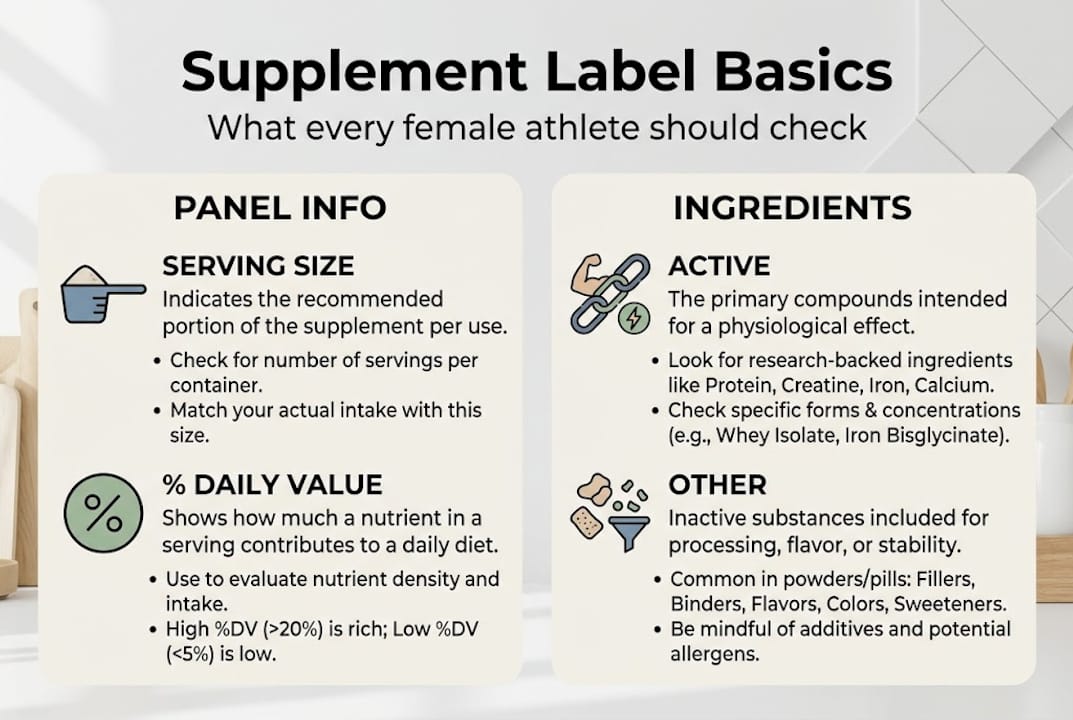
By law, supplement labels must include a Supplement Facts panel listing serving size, amounts per serving, percentage Daily Value for applicable nutrients, an ingredient list in descending order by weight, a statement of identity, net quantity, and manufacturer information. That framework gives you a reliable skeleton to work from regardless of the brand or the product category.
The key insight here is the word “descending.” Every ingredient, whether active or a filler, is listed from most to least by weight. So if the first ingredient in a protein powder is maltodextrin, that tells you something important about what you’re actually paying for.
Front panel vs. back panel
This is where many athletes get caught out. The front panel is entirely marketing territory. Words like “advanced formula,” “ultra-strength,” or “women’s performance” have no regulated definitions. The back panel, specifically the Supplement Facts section, is where regulated, enforceable information lives. Never make a buying decision based on front-panel language alone.
The front is designed by the marketing team. The back is governed by food and supplement regulations. Treat them accordingly.
What each label section tells you
| Label section | What it communicates |
|---|---|
| Statement of identity | The product type (e.g., “dietary supplement”) |
| Net quantity | Total amount in the container |
| Supplement Facts panel | Active nutrients, dosages, %DV |
| Other ingredients | Fillers, binders, allergens, excipients |
| Manufacturer details | Who made it and where |
| Disclaimer | Required legal statement separating health claims from drug claims |
Your first-glance checklist
When you pick up a new product, run through these quickly before reading any further:
- Is the Supplement Facts panel clearly printed and complete?
- Can you see the manufacturer’s name and country of manufacture?
- Is there a third-party certification logo?
- Does the ingredient list look short and recognisable, or full of unpronounceable additives?
If you want to understand why clean label supplements have become so important in the performance space, it comes down to exactly this checklist. Fewer mystery additives means easier label reading and fewer unknowns in your body.
Familiarising yourself with a solid supplement intake guide can also help you set context before you even open a label, because knowing your baseline needs makes the numbers on the panel far more meaningful.
Interpreting supplement facts: serving size, % Daily Value, and dosages
Now that you know what the label sections represent, it’s time to analyse the numbers inside the Supplement Facts panel.
The serving size trap
Serving size is arguably the most misread element on a label, and supplement companies know it. A tub of pre-workout might look modestly dosed per serving, but the suggested serving size might be two scoops. Compare that to studies using a single scoop and you’ve already doubled what was tested. Always check whether the serving size matches what research actually supports for your bodyweight and training load.
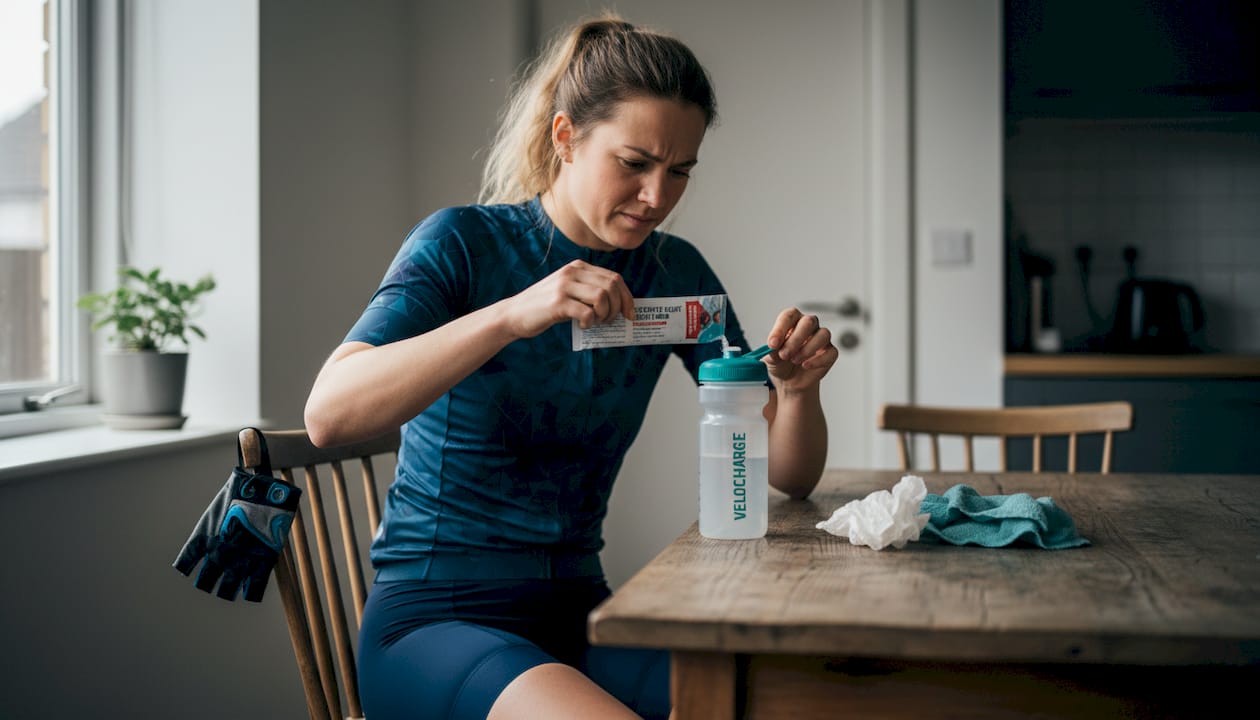
For women doing high-intensity sessions, this matters especially with electrolyte products. A single sachet might list 300mg of sodium. But if the directions say “take two,” your actual intake per session doubles. That detail changes your strategy around hydration.
Understanding % Daily Value for athletes
The %DV benchmarks work on a simple scale: 5% or less is considered low, and 20% or more is considered high for most nutrients. This helps you gauge whether a product makes a meaningful contribution to your daily intake or is essentially a trace amount dressed up in marketing copy.
Here’s the important caveat. %DV is calculated for the general population, typically a 2,000 kilocalorie diet for a sedentary adult. Female athletes in their 30s and 40s training multiple sessions a week have substantially higher requirements for nutrients like iron, magnesium, vitamin D, and B vitamins. A supplement showing 20% DV for magnesium might be generous for someone sedentary but barely noticeable against your actual daily depletion through sweat and muscle contraction.
Dosing examples that matter for performance
Consider creatine monohydrate. A label might show 3g per serving with a %DV listed as “not established.” Research consistently points to 3 to 5g daily for maintenance after a loading phase. If the label gives you 1.5g per serving, you need two servings to hit a meaningful dose. Knowing this saves you from underdosing and from assuming a product “didn’t work.”
Vitamin D is another good example. The general %DV is based on 600 to 800 IU, but sports nutrition research frequently highlights that female athletes, particularly those training indoors or in low-sunlight climates, may benefit from 2,000 IU or more. A product showing 100% DV of vitamin D might actually be the bare minimum you need.
Pro Tip: Write down every supplement you currently take and list the actual dosage from each label. Add them up across your full regimen. This catches unintentional doubling of ingredients, which is a common and easily avoided problem.
A quick guide to reading the numbers
- Check the serving size first and calculate how many servings you’ll realistically take.
- Look at the %DV with the understanding that your athletic needs likely exceed general benchmarks.
- Cross-reference dosages against peer-reviewed research for the specific ingredient.
- Note which nutrients say “Daily Value not established” as these are often the most important active ingredients.
Understanding why whole-food supplements sometimes show lower %DVs than synthetic counterparts is also useful here. Bioavailability matters as much as raw dosage, and labels rarely capture that nuance.
Scrutinising ingredients and additives
You’ve interpreted the facts, now let’s ensure that what’s inside meets your needs and avoids unwanted extras.
The ‘Other Ingredients’ section: where the truth hides
Below the main Supplement Facts panel, you’ll find a section typically labelled “Other Ingredients.” This is where fillers, binders, flow agents, allergens, and preservatives live. Like the main list, these are listed by weight in descending order, so the first item on this list is present in the largest amount.
Watch for allergens in this section. As of 2023, sesame joined the major allergen list requiring mandatory declaration. If you have any known sensitivities, this section is non-negotiable reading.
Red flags to look for in any supplement
- Artificial dyes (such as Red 40 or Yellow 5): No functional benefit and a potential irritant for some athletes
- Sugar alcohols (like sorbitol, xylitol, or erythritol): Can cause significant gastrointestinal distress mid-training if you’re sensitive
- Proprietary blends: A mix of multiple ingredients listed under one umbrella weight, with individual amounts hidden
- Excessive fillers: Ingredients like maltodextrin, silicon dioxide, or magnesium stearate in high concentrations
- Undisclosed sweeteners: Acesulfame potassium and sucralose are common, particularly in flavoured products, and are worth knowing about
“If you can’t identify an ingredient with a basic search, that’s a signal to dig further before buying. Your body will process everything on that list, not just the active ingredients.”
Proprietary blends: the biggest issue for athletes
A proprietary blend lists a group of ingredients with a combined total weight but hides individual amounts. For example, a “performance matrix” might list caffeine, beta-alanine, and citrulline with a combined 3,000mg. That sounds substantial until you realise caffeine alone at an effective dose is 150 to 200mg, leaving minimal room for the other two to reach functional levels.
This matters especially for supplement purity and athletic eligibility. If you cannot confirm individual dosages, you cannot confirm safety or efficacy.
Pro Tip: If a product uses proprietary blends, email the manufacturer directly and ask for individual ingredient amounts. A reputable company will provide this. Reluctance to share is itself informative.
Understanding how to transition to natural supplements often begins with this exact step: identifying what you’re currently consuming in the “Other Ingredients” section and deciding whether those additives serve your goals.
Verifying quality: certifications, claims, and decoding marketing language
With your ingredient list scrutinised, the final step is verifying the product’s trustworthiness and cutting through marketing hype.
Third-party certifications: what they actually mean
Not all certifications are equal. The most relevant ones for competitive or serious recreational athletes are:
| Certification | What it checks | Athlete-specific value |
|---|---|---|
| NSF Certified for Sport | 290+ banned substances screened | Highest relevance for competition |
| USP Verified | Label accuracy, purity, potency | Strong general assurance |
| ConsumerLab | Independent testing | Good for comparison shopping |
| Informed Sport | Banned substance batch testing | Widely accepted in UK sport |
You can verify any certification by visiting the certifying body’s official database and searching for the product by name or batch number. A logo on a label is not enough because it’s easy to fake. The database check takes under two minutes and is worth every second.
Marketing claims vs. regulated language
Structure/function claims such as “supports energy metabolism” or “supports muscle recovery” are legal but must be accompanied by an FDA-required disclaimer stating the claim has not been evaluated by the relevant regulatory authority. These are not medical claims, and the product has not been approved to treat, diagnose, or cure anything.
If you see a supplement claiming to “treat fatigue” or “cure inflammation,” that crosses into illegal disease claim territory. Walk away from those products entirely. The distinction between supportive language and medical claims is deliberate and regulated, so anything that blurs that line is a warning sign about the brand’s overall credibility.
Athlete-specific risks from unlabelled contaminants
This is not a theoretical concern. Positive doping tests from contaminated supplements have ended careers, cost medals, and caused years of bans for athletes who had no intention of cheating. The contamination is rarely deliberate but stems from shared manufacturing facilities, poor quality control, or undisclosed additives.
A guide to supplement certifications for female athletes will walk you through which bodies carry the most rigorous testing standards. For anyone competing under anti-doping rules, the NSF Certified for Sport or Informed Sport marks are non-negotiable considerations.
For a broader understanding of how to apply this knowledge day to day, reading an athlete’s guide to safe performance supplements connects these individual label skills into a coherent purchasing strategy.
Why reading supplement labels is non-negotiable for female athletes
Here is the uncomfortable reality that rarely gets said plainly: the supplement industry is not primarily designed around your wellbeing. It is designed around sales. That does not make every product harmful, but it does mean that the default assumption should be scepticism, not trust.
Female athletes face a compounded risk. Hormonal fluctuations across the menstrual cycle affect how your body absorbs and uses nutrients. That means dosage information designed for the general population, which is overwhelmingly male in most research contexts, may not map cleanly onto your physiology. A label that looks impressive on paper might deliver entirely different results in your body.
We’ve seen athletes confidently using products for months before realising a proprietary blend contained a stimulant at levels affecting their sleep, recovery, and ultimately their training consistency. No label claim flagged that. It required reading every ingredient and doing the maths on the blend’s composition. That knowledge, once you have it, is genuinely empowering.
Choosing clean supplements is not about being restrictive or overly cautious. It is about exercising the same analytical precision in your nutrition that you apply to your training programme. You wouldn’t follow a vague training plan with hidden details. Don’t accept a supplement that operates on the same principle.
Upgrade your nutrition with science-backed supplements
Ready to apply your label-reading skills and advance your nutrition?
At Interval, we believe that every athlete deserves full transparency in what they put in their body. Our pre-workout and electrolyte products are formulated with natural ingredients, individually disclosed dosages, and no proprietary blends obscuring what you’re actually getting. Every label is designed to be read, understood, and trusted by athletes who take their training seriously.

If you’re looking for a starting point that reflects everything covered in this guide, the Starter Bundle brings together our most popular products in a package built for high-intensity female athletes. Clear labels, clean ingredients, and formulations that align with what real performance nutrition looks like in 2026. No guesswork, no hidden blends, just honest supplements you can verify for yourself.
Frequently asked questions
What does % Daily Value mean on supplement labels?
% Daily Value shows how much a nutrient in a serving contributes to a standard daily diet, but active women often need considerably more than these general benchmarks suggest, particularly for minerals like magnesium and iron that deplete rapidly through intense training.
How can I tell if a supplement is safe for sport?
Check for third-party certifications such as NSF Certified for Sport, which screens for 290+ banned substances and verifies label accuracy. Always confirm the certification via the official database rather than relying on the logo alone.
Where are allergens listed on supplement labels?
Allergens appear in the Other Ingredients list, which is ordered by weight. Sesame became a required declaration in 2023, joining nuts, dairy, soy, and other major allergens that manufacturers must disclose clearly.
Are ‘proprietary blends’ a problem for female athletes?
Yes, because blends list a combined weight for multiple ingredients without disclosing individual amounts, making it impossible to verify whether each ingredient reaches a dose that is both safe and effective for your training demands.